
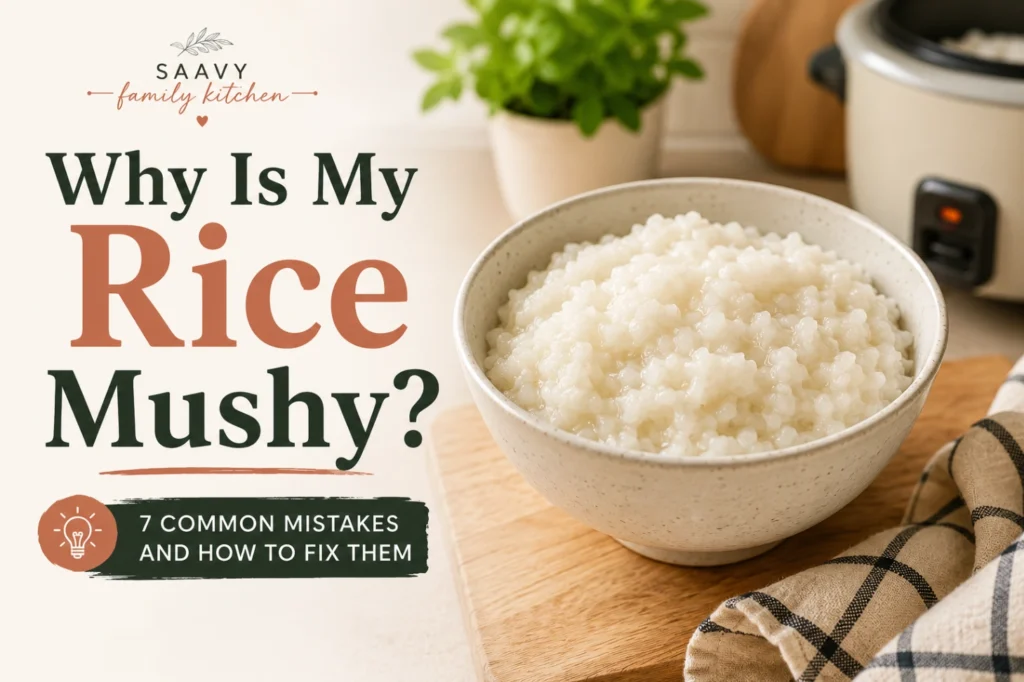
Why Is My Rice Mushy? (7 Common Mistakes and How to Fix Them)
There’s nothing more disappointing than lifting the lid on a pot of rice and finding a sticky, mushy mess instead of light, fluffy grains. The good news? Mushy rice is one of the most common cooking problems, and it’s usually caused by one or two simple mistakes that are easy to fix.
Whether you’re cooking rice for a quick weeknight stir-fry, serving it alongside your favourite curry, or making a comforting family dinner like our Creamy Chicken and Rice Bake, getting the texture right makes all the difference. Once you understand what causes rice to become mushy, you’ll be able to cook perfectly fluffy rice with confidence every time.
In this guide, we’ll explain the most common reasons rice turns mushy, how to rescue it when possible, and the simple tips that will help you avoid the problem in the future.
Why Does Rice Become Mushy?
Mushy rice usually comes down to one simple problem – it has absorbed more water than it needs or has cooked for longer than necessary.
As the grains soak up excess moisture, they soften, break apart, and lose the light, fluffy texture most of us are aiming for.
The good news? A few small adjustments to your water ratio, cooking time, or even the type of rice you use can make a big difference.
1. You’re Using Too Much Water
This is by far the most common cause of mushy rice.
Different types of rice absorb different amounts of liquid, so using a one-size-fits-all approach doesn’t always work.
As a general guide:
- Long grain white rice: 1 cup rice to 2 cups water
- Basmati rice: 1 cup rice to 1¾ cups water
- Jasmine rice: 1 cup rice to 1½ cups water
- Brown rice: Follow the packet instructions, as it requires more liquid.
Saavy Tip: Measuring cups are your best friend here. A quick guess can easily turn fluffy rice into rice pudding!
2. You’re Cooking It for Too Long
Even with the correct amount of water, leaving rice on the heat for too long allows it to continue absorbing moisture.
If you’re following a recipe, start checking the rice a few minutes before the suggested cooking time.
Remember, rice continues to steam and soften while it rests after cooking, so it doesn’t need to stay on the heat until every last drop of moisture has disappeared.
3. You’re Stirring the Rice Too Much
It’s tempting to keep checking on your rice, especially if you’re worried it’s sticking.
Unfortunately, frequent stirring breaks the grains apart and releases starch, creating a stickier, softer texture.
Once the rice is simmering, place the lid on, lower the heat, and let it do its thing. Think of it as giving the rice a little uninterrupted nap.
4. You’re Using the Wrong Type of Rice
Not all rice cooks the same way.
Some varieties, such as Arborio rice, are naturally creamy and are designed for dishes like risotto.
If you’re aiming for fluffy rice, choose varieties such as:
- Long grain rice
- Basmati rice
- Jasmine rice
Using the right rice for the right recipe makes a big difference.
5. You Didn’t Rinse the Rice
Some types of rice contain extra surface starch that can make the cooked rice sticky.
Rinsing the rice under cold running water until the water runs mostly clear removes much of this starch and helps produce fluffier grains.
While not every recipe requires rinsing, it’s a useful step for many long-grain varieties.
6. The Lid Was Removed Too Often
Every time you lift the lid, steam escapes.
That changes the cooking environment and often encourages people to add more water because the rice appears dry.
Trust the process. Resist the urge to peek every couple of minutes.
Your rice doesn’t need constant supervision—it isn’t going anywhere!
7. The Rice Didn’t Rest
Once the rice has finished cooking, let it sit with the lid on for around 10 minutes.
This allows the remaining moisture to distribute evenly throughout the pot.
After resting, gently fluff the rice with a fork rather than stirring it with a spoon.
Can You Fix Mushy Rice?
Sometimes.
If the rice is only slightly overcooked, spread it onto a baking tray and allow the steam to escape for a few minutes.
You can also:
- Leave it uncovered for 5–10 minutes.
- Gently fluff it with a fork.
- Refrigerate it before using it for fried rice the next day.
If the rice has become very soft, it may not be suitable as a side dish, but it can still be used in soups, casseroles, rice puddings, or homemade rice cakes.
Remember, even experienced cooks occasionally end up with a pot of overcooked rice. It happens!
How to Cook Perfect Rice Every Time
For consistently fluffy rice:
✔ Measure your rice and water carefully.
✔ Choose the correct type of rice for the recipe.
✔ Avoid lifting the lid while it cooks.
✔ Don’t stir during cooking.
✔ Allow the rice to rest before serving.
✔ Fluff gently with a fork.
These simple habits make a huge difference and quickly become second nature.
Frequently Asked Questions
Why is my rice sticky instead of fluffy?
Sticky rice is usually caused by excess starch, too much water, overcooking, or stirring during cooking.
Should I rinse rice before cooking?
For many long-grain varieties, yes. Rinsing removes excess starch and helps create fluffier rice.
Can I eat mushy rice?
Absolutely. As long as it has been cooked and stored safely, mushy rice is perfectly safe to eat. The texture may not be ideal, but it can still be used in many other dishes.
Why is my rice crunchy and mushy at the same time?
This usually means the heat was too high or the liquid wasn’t distributed evenly. Some grains cooked too quickly while others didn’t absorb enough water.
Is mushy rice caused by too much water?
Most of the time, yes. Using too much water is the most common reason rice becomes soft and mushy.
Final Thoughts
Mushy rice is frustrating, but it’s also one of the easiest cooking problems to solve. A few small changes—using the right amount of water, choosing the correct rice, avoiding unnecessary stirring, and letting it rest—can completely transform your results.
The next time you’re making a family favourite, you’ll be rewarded with fluffy, separate grains instead of a sticky pot of disappointment.
And if your rice doesn’t turn out perfectly this time? Don’t be too hard on yourself. Every good home cook has overcooked a pot of rice at least once—some of us just prefer not to talk about it!
Keep Solving Your Kitchen Problems
If you’re enjoying our cooking tips, here are a few more guides to help make everyday cooking easier:
- Why Is My Chicken Bland?
- Why Is My Pasta Mushy?
- How to Tell When Chicken Is Cooked Without Cutting Into It
- How Much Pasta Per Person?
Looking for recipes to put your perfectly cooked rice to good use? Try our Creamy Chicken and Rice Bake or browse our Easy Family Dinners collection for more budget-friendly meals the whole family will love.
If you’re struggling with other common kitchen problems, explore our Cooking Problems Hub for simple fixes, troubleshooting tips, and easy ways to improve your results in the kitchen.