
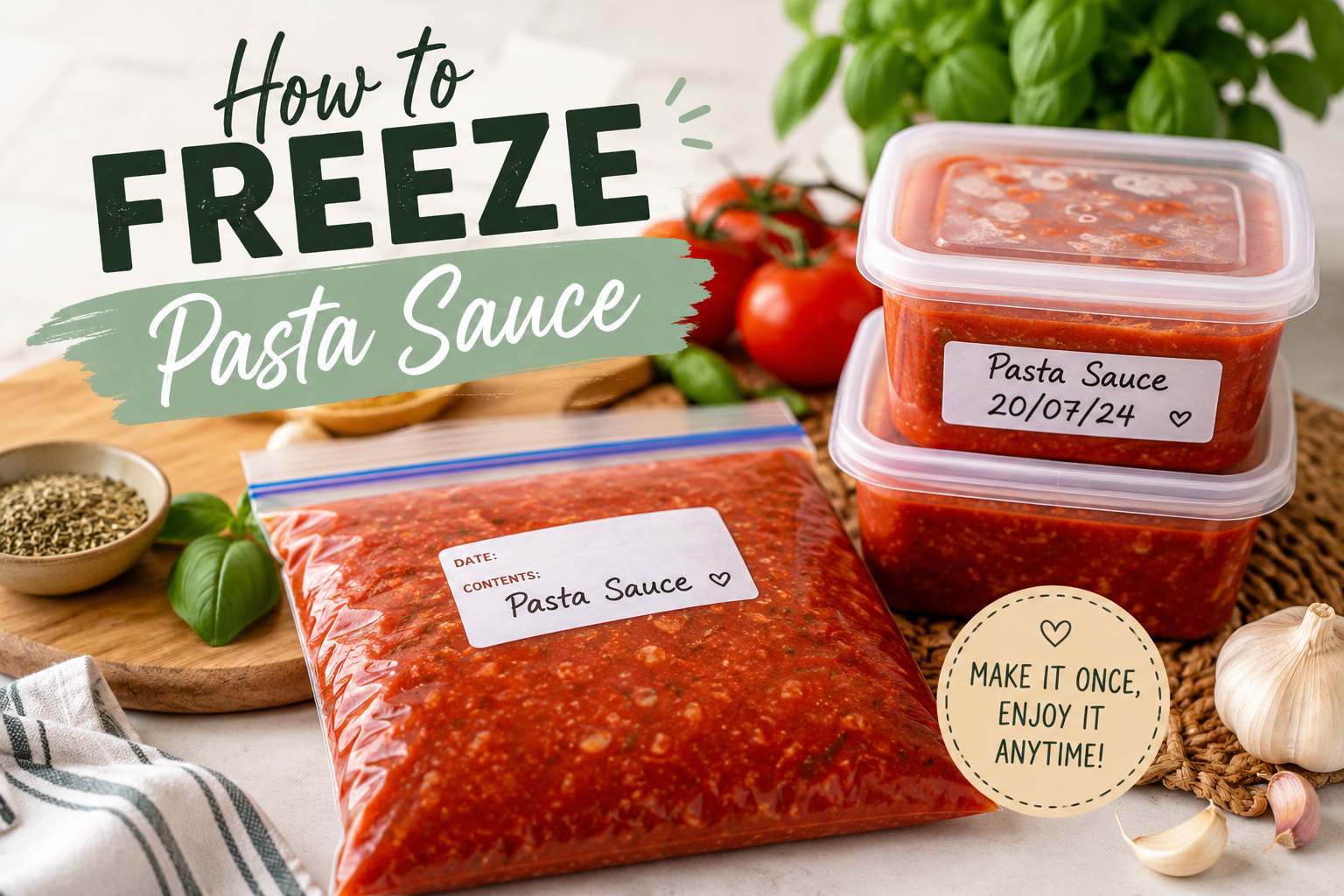
Made too much pasta sauce? Don’t let it go to waste.
Whether you’ve cooked a big batch of homemade tomato sauce, creamy Alfredo, or a rich Bolognese, freezing is one of the easiest ways to save both time and money. Having homemade pasta sauce ready to go means dinner can be on the table in minutes on busy weeknights.
The good news is that most pasta sauces freeze surprisingly well—as long as you cool, store and thaw them correctly. Some sauces, particularly cream-based varieties, need a little extra care to keep their texture smooth after freezing.
In this guide you’ll learn:
- Common mistakes to avoid
- Which pasta sauces freeze best
- Which sauces don’t freeze as well
- The best containers to use
- How long frozen sauce lasts
- The safest way to thaw and reheat it
Quick Answer
Can you freeze pasta sauce?
Yes. Most homemade pasta sauces freeze well for up to 3 months when stored in airtight containers or freezer bags. Tomato-based sauces freeze exceptionally well, while cream-based sauces may separate slightly after thawing but can usually be restored with gentle reheating.
Which Pasta Sauces Freeze Best?
The good news is that most pasta sauces freeze well, but some hold up better than others. Tomato-based sauces are the clear winner because they contain very little dairy, making them less likely to separate or change texture after thawing. If you’re planning to make extra sauce for future meals, tomato-based recipes are your best choice.
Tomato-Based Pasta Sauces ⭐⭐⭐⭐⭐
Tomato sauces are among the easiest foods to freeze. Their naturally high acidity and low dairy content help them retain their flavour, texture, and consistency, even after several months in the freezer. Once thawed and reheated, they’re often just as delicious as the day they were made.
Some of the best tomato-based sauces to freeze include:
- Marinara sauce
- Homemade tomato pasta sauce
- Arrabbiata sauce
- Pizza sauce
- Bolognese (meat-based tomato sauce)
- Neapolitan-style pasta sauce
Whether you’ve made a large batch from fresh tomatoes or canned tomatoes, freezing is a simple way to reduce food waste and have homemade meals ready whenever you need them.
Why Tomato Sauces Freeze So Well
Unlike cream-based sauces, tomato sauces don’t contain ingredients that are prone to separating when frozen. The tomato base remains stable, helping the sauce keep its smooth consistency throughout the freezing and thawing process.
Tomato sauces also tend to become even more flavourful over time as the herbs, garlic, onions, and seasonings continue to meld together. Once reheated, the sauce usually tastes just as rich and satisfying as it did when it was freshly cooked.
For the best results:
- Allow the sauce to cool completely before freezing.
- Store it in airtight freezer-safe containers or freezer bags.
- Leave a small amount of space at the top of the container to allow for expansion as the sauce freezes.
- Freeze in meal-sized portions so you only thaw what you need.
When stored properly, homemade tomato pasta sauce can be frozen for up to 3 months while maintaining its best flavour and quality.
If you’re looking for freezer-friendly recipes, our Easy Homemade Tomato Pasta Sauce is an excellent choice and freezes beautifully for quick family dinners.
Bolognese Sauce ⭐⭐⭐⭐⭐
Bolognese sauce freezes exceptionally well and is one of the best make-ahead meals for busy families. The slow-cooked combination of minced beef, tomatoes, onions, carrots, celery, and herbs holds its flavour and texture remarkably well in the freezer.
In fact, the meat helps the sauce maintain its consistency after thawing, making it less likely to become watery than some lighter tomato sauces. Many people find that Bolognese tastes even better after freezing because the flavours have had more time to develop.
For the best results, let the sauce cool completely before transferring it to airtight freezer-safe containers or freezer bags. Freeze it in family-sized or single-serve portions so you can thaw only what you need for each meal.
Homemade Bolognese sauce will keep its best quality in the freezer for up to 3 months. When you’re ready to use it, thaw it overnight in the refrigerator or gently reheat it from frozen over low heat, stirring occasionally until heated through.
If you love meal prepping, Bolognese is one of the easiest homemade sauces to keep stocked in your freezer for quick pasta nights.
Pesto Sauce ⭐⭐⭐⭐☆
Pesto freezes well and is a great way to preserve fresh basil when you have more than you can use. While it may not look quite as vibrant after freezing and thawing, the flavour remains delicious and it is still a convenient homemade sauce to keep ready for quick meals.
The main change you may notice is that pesto can lose some of its bright green colour over time. This happens because the fresh basil leaves naturally oxidise when exposed to air. The sauce is still perfectly safe to eat, but it may look slightly darker or more olive green after freezing.
To help preserve the colour and flavour:
- Freeze pesto as soon as possible after making it.
- Store it in airtight containers to reduce air exposure.
- Cover the surface with a thin layer of olive oil before freezing.
- Freeze in small portions, such as ice cube trays, so you can thaw only what you need.
Pesto is best used within 3–6 months for the freshest flavour. It works beautifully stirred through pasta, spread onto sandwiches, added to roasted vegetables, or mixed into creamy sauces.
If you make homemade pesto regularly, freezing extra portions means you can enjoy fresh basil flavour even when basil is out of season.
Alfredo Sauce ⭐⭐⭐☆☆
Alfredo sauce can be frozen, but it does require a little more care than tomato-based sauces. Because Alfredo is made with dairy ingredients such as cream, butter, and cheese, the sauce may separate slightly during the freezing and thawing process.
This does not mean the sauce has gone bad. After thawing, the texture can usually be brought back together with gentle reheating and a little extra stirring. The flavour often remains rich and delicious, making it worth freezing if you have leftovers or want to prepare meals ahead of time.
For the best results when freezing Alfredo sauce:
- Allow the sauce to cool completely before freezing.
- Store it in an airtight freezer-safe container.
- Freeze in smaller portions so it thaws more evenly.
- Avoid overheating when reheating, as high temperatures can cause the dairy to separate further.
When you’re ready to use frozen Alfredo sauce, thaw it slowly in the refrigerator overnight if possible. Reheat it over low heat, stirring frequently. If the sauce looks slightly separated, whisk in a small splash of milk or cream to help restore its smooth, creamy texture.
Frozen Alfredo sauce is best used within 2–3 months for the best flavour and texture. While it may not be quite as silky as freshly made Alfredo, it is still a convenient way to save leftovers and create quick, comforting meals.
Creamy Garlic Parmesan Sauce ⭐⭐⭐☆☆
Creamy garlic Parmesan sauce can be frozen, but like Alfredo sauce, it needs a little extra care because of the dairy and cheese content. Freezing can sometimes cause the sauce to separate slightly, leaving a thinner or grainier texture once thawed.
The good news is that this does not mean you need to throw it away. With slow reheating and a little whisking, most creamy Parmesan sauces can be brought back to a smooth, creamy consistency.
For the best results when freezing creamy garlic Parmesan sauce:
- Cool the sauce completely before storing.
- Use airtight freezer-safe containers to prevent freezer burn.
- Freeze in smaller portions for easier thawing and reheating.
- Leave a little space at the top of containers to allow for expansion.
When reheating, avoid high heat. Warm the sauce gently over low heat, whisking frequently to help bring the ingredients back together. If the sauce seems too thick or slightly separated, add a small splash of milk, cream, or pasta water while whisking until it reaches the desired consistency.
Creamy garlic Parmesan sauce is best used within 2–3 months for the best flavour and texture. While freshly made sauce will always have the smoothest finish, freezing is a practical way to save leftovers or prepare a quick homemade sauce for busy weeknight meals.
If you enjoy making homemade sauces from scratch, our Creamy Garlic Parmesan Pasta Sauce is a great freezer-friendly option to keep on hand.
Vodka Sauce ⭐⭐⭐⭐☆
Vodka sauce freezes surprisingly well and is a great option if you like preparing homemade sauces ahead of time. Although it contains cream, the tomato base helps balance the richness and allows the sauce to maintain a good texture after freezing and thawing.
The combination of tomatoes, cream, garlic, herbs, and Parmesan creates a sauce that generally holds up better in the freezer than many other cream-based sauces. You may notice a slight change in texture after thawing, but gentle reheating and stirring will usually restore its smooth, creamy consistency.
For the best results when freezing vodka sauce:
- Allow the sauce to cool completely before freezing.
- Store it in airtight freezer-safe containers.
- Freeze in portions that match your usual pasta servings.
- Label the container with the date so you can keep track of freshness.
When reheating, warm the sauce slowly over low heat and stir regularly. If the sauce appears slightly separated, add a splash of cream, milk, or pasta water while stirring to help bring it back together.
Frozen vodka sauce is best enjoyed within 3 months for the best flavour and texture. It is an excellent freezer staple for busy nights when you want a comforting homemade pasta meal without starting from scratch.
If you enjoy rich, restaurant-style pasta sauces at home, making an extra batch of vodka sauce and freezing portions can save time while still giving you a homemade meal whenever you need it.
How to Freeze Pasta Sauce (Step-by-Step)
Freezing pasta sauce is simple, but following the right steps will help protect the flavour, texture, and quality of your homemade sauce. Taking a few extra minutes before freezing can make a big difference when you are ready to thaw and reheat it later.
Step 1: Allow the Sauce to Cool Completely
Before transferring pasta sauce to the freezer, allow it to cool completely to room temperature.
Placing hot sauce directly into the freezer can cause several problems. First, it can raise the temperature inside your freezer, which may affect other frozen foods nearby. It can also create excess condensation inside the container, leading to ice crystals that can affect the sauce’s texture and flavour over time.
For the best results, transfer the cooked sauce into a clean, shallow container to help it cool faster. Avoid leaving sauce at room temperature for too long; once it has stopped steaming and has cooled slightly, move it to the refrigerator if you need more time before freezing.
A good rule is to freeze your sauce on the same day it is made. This helps lock in the freshest flavour and gives you the best texture once it is thawed and reheated.
Step 2: Portion the Sauce Before Freezing
Before freezing your pasta sauce, divide it into portions that match how you normally use it. Freezing sauce in smaller amounts makes it much easier to thaw only what you need instead of defrosting an entire batch every time.
The best portion size depends on your household and how you plan to use the sauce:
- 1 cup portions: Ideal for quick lunches, single servings, or adding extra flavour to smaller meals.
- 2 cup portions: A great size for a typical pasta dinner or smaller family meal.
- Family-sized portions: Perfect for busy weeknight dinners when you need enough sauce for everyone at the table.
Portioning your sauce before freezing also helps it thaw more evenly and reduces waste. If you only need enough sauce for one meal, you can simply remove one container or bag from the freezer instead of reheating and refreezing leftovers.
For maximum convenience, consider freezing sauces in the same quantities you usually cook with. For example, if one batch of homemade tomato pasta sauce normally covers a family pasta dinner, freeze it as one complete meal portion so it is ready to use whenever you need a quick homemade dinner.
Step 3: Choose the Right Freezer Container
Choosing the right container can help prevent freezer burn, protect the flavour of your sauce, and make storing and reheating much easier. The best option depends on how much sauce you are freezing and how you plan to use it later.
| Container | Best for | Reusable |
|---|---|---|
| Plastic freezer containers | Family-sized portions and everyday freezer storage | Yes |
| Glass freezer-safe jars | Meal prep and reducing plastic use | Yes |
| Silicone freezer trays | Small portions, pesto, or sauce cubes | Yes |
| Freezer bags | Saving space and stacking flat | No |
When choosing a container, make sure it is specifically designed for freezer use. Regular glass jars or containers can crack when frozen if they are not suitable for temperature changes.
Always leave some space at the top of your container before freezing. Pasta sauce expands as it freezes, and filling containers completely can cause them to crack, leak, or make the lid difficult to remove.
A good guide is to leave around 2–3 cm of space at the top of the container, depending on the size and shape. This small step helps your sauce freeze safely while maintaining the best possible quality.
Step 4: Label Your Sauce Before Freezing
Before placing your pasta sauce in the freezer, take a moment to label the container. It may seem like a small step, but it makes managing your freezer much easier, especially when you have multiple homemade meals stored away.
Always include:
- The name of the sauce – such as Tomato Pasta Sauce, Bolognese, or Alfredo.
- The date it was frozen – so you know how long it has been stored.
- Optional details – such as the number of servings or any adjustments you made to the recipe.
Labels help you quickly identify what you have available and prevent forgotten containers from sitting in the back of the freezer for months.
For the best quality, use older sauces first and try to enjoy frozen pasta sauce within the recommended storage time. A simple label means you can confidently grab a homemade sauce from the freezer whenever you need an easy meal.
Step 5: Freeze Flat If Using Freezer Bags
If you are using freezer bags to store your pasta sauce, freezing them flat is one of the easiest ways to save space and make thawing faster.
Once the sauce has cooled completely, carefully transfer it into a freezer-safe bag, leaving some room at the top for expansion. Remove as much excess air as possible before sealing, then lay the bag flat in your freezer until the sauce is completely frozen.
Freezing bags flat has several benefits:
- Saves freezer space: Flat bags can be stacked neatly like files instead of taking up valuable shelf space.
- Thaws faster: A thin layer of frozen sauce defrosts much quicker than a large solid block.
- Makes organisation easier: Multiple sauces can be stored together and easily sorted.
Once frozen solid, you can stand the bags upright or stack them together depending on your freezer setup.
For the best results, avoid using thin storage bags that are not designed for freezing. Freezer-safe bags are thicker, helping protect your sauce from freezer burn and keeping the flavour fresher for longer.
Best Containers for Freezing Pasta Sauce
The best container for freezing pasta sauce depends on how much sauce you usually make, how much freezer space you have, and how you plan to use it later. A good freezer container should be airtight, freezer-safe, and easy to portion when you are ready to cook.
Here are the most popular options:
Plastic Freezer Containers
Plastic freezer containers are one of the most practical choices for storing pasta sauce. They are lightweight, affordable, and available in a wide range of sizes, making them ideal for family-sized portions.
Pros:
- Lightweight and easy to store
- Available in many sizes
- Durable and less likely to break
- Stack neatly in the freezer
- Easy to label and organise
Cons:
- Can absorb strong colours or smells from some sauces over time
- May need replacing after repeated use
- Lower-quality containers may stain or become brittle when frozen
Plastic containers are a great everyday option if you regularly freeze homemade sauces, especially larger batches of tomato sauce or Bolognese.
Glass Freezer-Safe Containers
Glass containers are a popular choice for meal prep because they are reusable, durable, and do not absorb flavours or colours from food. They are especially useful if you like to move meals from freezer to fridge and then reheat them in the same container.
Pros:
- Reusable and long-lasting
- Does not absorb smells or stains
- Easy to see what is stored inside
- Good for meal prep organisation
- Often stack neatly when designed for freezer storage
Cons:
- Heavier than plastic options
- Can break if dropped
- Requires freezer-safe glass to prevent cracking
If using glass, always check that the container is designed for freezing and leave enough space at the top for the sauce to expand.
Silicone Freezer Trays
Silicone freezer trays are perfect for smaller portions of sauce. They are especially useful for pesto, tomato sauce portions, or adding a small amount of sauce to quick meals.
Pros:
- Great for portion control
- Easy to remove individual servings
- Reusable
- Saves space
- Useful for freezing small amounts
Cons:
- Not ideal for large batches
- Can be awkward to stack when filled
- Requires transferring portions once frozen for long-term storage
Silicone trays are a convenient option if you often need just a small amount of sauce rather than a full family meal portion.
Freezer Bags
Freezer bags are one of the best space-saving options, especially if you make large batches of pasta sauce. When frozen flat, they take up very little room and can be stacked easily.
Pros:
- Saves significant freezer space
- Freezes and thaws quickly
- Easy to portion
- Can be stacked flat
- Great for bulk cooking
Cons:
- Usually single-use
- Can leak if not sealed properly
- Less convenient once partially thawed
Freezer bags are ideal if freezer space is limited or you like batch cooking several sauces at once. Freezing them flat also makes it easier to organise your freezer and quickly find the sauce you need.
The Best Choice for You
For most families, a combination of containers works best:
- Family meals: Plastic containers or large freezer bags
- Meal prep portions: Glass containers
- Small amounts: Silicone trays
- Limited freezer space: Flat freezer bags
No matter which option you choose, the most important things are using freezer-safe storage, removing excess air where possible, and sealing containers properly to protect your homemade pasta sauce from freezer burn.
How Long Does Pasta Sauce Last?
The storage life of pasta sauce depends on whether it is homemade or store-bought, and whether it is tomato-based or cream-based. Proper storage is important for maintaining flavour, texture, and food safety.
Always store pasta sauce in airtight containers and keep it refrigerated or frozen as soon as possible after cooking or opening.
| Type of Pasta Sauce | Fridge | Freezer |
|---|---|---|
| Homemade tomato-based sauce | 3–5 days | Up to 3 months |
| Homemade Bolognese sauce | 3–5 days | Up to 3 months |
| Homemade cream-based sauces (Alfredo, Parmesan sauces) | 3–4 days | 2–3 months |
| Opened store-bought pasta sauce | 5–7 days | Up to 3 months |
Homemade Pasta Sauce
Homemade pasta sauces generally last around 3–5 days in the refrigerator when stored correctly in an airtight container. Freezing is a great option if you know you will not use the sauce within that time, allowing you to preserve the flavour and reduce food waste.
Tomato-based sauces, such as marinara, tomato pasta sauce, and Bolognese, usually maintain their quality best after freezing.
Cream-Based Pasta Sauces
Cream-based sauces, including Alfredo and creamy garlic Parmesan sauce, have a shorter fridge life because they contain dairy ingredients. These sauces are best used within 3–4 days when refrigerated.
While cream sauces can be frozen, the texture may change slightly after thawing. Gentle reheating, frequent stirring, and adding a small splash of milk, cream, or pasta water can help restore the smooth consistency.
Opened Jarred Pasta Sauce
Once opened, store-bought pasta sauce should be transferred to a clean airtight container if possible and stored in the refrigerator. Most opened sauces will last around 5–7 days, but always check the manufacturer’s instructions and look for signs of spoilage before using.
If you have more sauce than you can use, freezing is a simple way to extend its life and avoid wasting food.
Signs Pasta Sauce Has Gone Bad
Whether refrigerated or frozen, avoid using pasta sauce if you notice:
- A sour or unusual smell
- Visible mould
- A slimy texture
- A significant change in colour or appearance
When in doubt, it is safest to discard the sauce.
How to Thaw Frozen Pasta Sauce
Once you are ready to use your frozen pasta sauce, thawing it properly will help protect the flavour and texture. The best method depends on how much time you have and the type of sauce you are reheating.
Tomato-based sauces are generally more forgiving and can often be reheated straight from frozen, while cream-based sauces benefit from slower thawing to help prevent separation.
Method 1: Thaw Overnight in the Refrigerator (Best Method)
The easiest and most reliable way to thaw pasta sauce is to move it from the freezer to the refrigerator the night before you plan to use it.
Slow thawing helps the sauce warm gradually and reduces the chance of texture changes, especially with sauces containing cream or cheese. Once thawed, the sauce can be reheated gently on the stovetop until warmed through.
This method works well for:
- Alfredo sauce
- Creamy garlic Parmesan sauce
- Bolognese
- Large portions of tomato sauce
For best results, place the frozen container on a plate or bowl in the refrigerator to catch any condensation as it thaws.
Method 2: Thaw in Cold Water (Faster Method)
If you need your sauce sooner, you can speed up the process using cold water.
Place the sealed freezer bag or container in a bowl of cold water, changing the water every 30 minutes to help it thaw evenly. Smaller portions will usually thaw much faster than larger containers.
Avoid using hot water, as it can encourage uneven thawing and may affect the quality of the sauce.
This method is useful when you need dinner ready quickly but still want to thaw the sauce before reheating.
Method 3: Reheat Directly From Frozen
For many tomato-based sauces, you can skip thawing completely and reheat the sauce straight from frozen.
Place the frozen sauce in a saucepan over low heat and allow it to gradually melt, stirring occasionally as it loosens. Add a small splash of water or pasta water if needed to help the sauce return to the right consistency.
This method works particularly well for:
- Tomato pasta sauce
- Marinara sauce
- Arrabbiata sauce
- Bolognese sauce
Cream-based sauces are better thawed first where possible, as gentle reheating gives the dairy ingredients a better chance of staying smooth.
The Best Thawing Method Depends on Your Sauce
For the best texture:
- Tomato sauces: Can be thawed overnight or reheated from frozen.
- Bolognese: Works well from frozen or thawed slowly.
- Cream sauces: Thaw overnight for the smoothest result.
- Small portions: Cold water thawing is quick and convenient.
Taking a little extra care when thawing means your frozen pasta sauce will taste much closer to freshly made..
How to Reheat Frozen Pasta Sauce
Reheating frozen pasta sauce properly is just as important as freezing it correctly. Using gentle heat helps preserve the flavour and texture, while rushing the process can cause sauces to become watery, separated, or unevenly heated.
The best reheating method depends on the type of sauce you are using.
Reheat Slowly Over Low Heat
For the best results, place your thawed pasta sauce in a saucepan and warm it over low to medium-low heat. Stir regularly as it heats to help distribute the temperature evenly and prevent the sauce from sticking to the bottom of the pan.
Avoid turning the heat up too high. Rapid heating can cause dairy-based sauces to split and may make tomato sauces lose their smooth consistency.
Allow the sauce to warm gradually until it is heated through and reaches your desired texture.
Whisk Cream-Based Sauces
Creamy sauces such as Alfredo and creamy garlic Parmesan may separate slightly after freezing. This is normal and does not mean the sauce has been ruined.
As the sauce reheats, use a whisk to gently bring the ingredients back together. The whisking action helps combine the cream, cheese, and butter, restoring a smoother consistency.
If the sauce appears too thick or slightly grainy, add a small splash of:
- Milk
- Cream
- Pasta water
Add the liquid gradually while whisking until the sauce becomes smooth and creamy again.
Add Water to Tomato-Based Sauces If Needed
Tomato-based sauces usually freeze very well, but they can sometimes become slightly thicker after thawing. If your sauce seems too concentrated, add a small splash of water or pasta water while reheating.
Pasta water is especially useful because the starch helps the sauce cling to the pasta while bringing back a silky texture.
Start with a small amount and add more if needed until the sauce reaches the consistency you prefer.
Final Reheating Tips
For the best results:
- Stir regularly while reheating.
- Avoid boiling creamy sauces.
- Add liquids slowly rather than all at once.
- Taste and adjust seasoning after reheating.
- Heat only the amount you plan to eat.
With gentle reheating, most frozen pasta sauces can taste almost as good as the day they were made, making freezer-friendly homemade sauces a simple way to save time on busy nights.
Common Mistakes When Freezing Pasta Sauce
Freezing pasta sauce is a simple way to save time and reduce food waste, but a few common mistakes can affect the flavour, texture, and quality of your sauce. Avoiding these problems will help ensure your homemade sauce tastes just as good when you thaw and reheat it later.
Freezing Hot Sauce
One of the most common mistakes is placing hot pasta sauce directly into the freezer.
Hot sauce can raise the temperature inside your freezer, which may affect other frozen foods. It can also create extra condensation inside the container, leading to ice crystals that can change the texture of the sauce.
Allow your sauce to cool before freezing. For faster cooling, divide large batches into smaller containers or place the sauce in a shallow dish before transferring it to freezer storage.
Overfilling Containers
Pasta sauce expands as it freezes, and filling containers right to the top can cause problems.
Overfilled containers may crack, leak, or become difficult to open once frozen. This is especially important when using glass containers, as the pressure from expanding sauce can damage the container.
Always leave some space at the top of your container to allow room for expansion.
Forgetting Labels
It is easy to forget what is hiding in your freezer, especially if you regularly batch cook meals.
Unlabelled containers can leave you guessing whether you have tomato sauce, Bolognese, Alfredo, or another recipe stored away. Adding a simple label with the sauce name and freezing date makes freezer organisation much easier.
Using older sauces first also helps prevent food from being forgotten and sitting in the freezer for too long.
Freezing Cooked Pasta With Sauce
While it is possible to freeze pasta with sauce, it often does not produce the best texture. Cooked pasta can become soft and mushy after freezing and reheating because it continues absorbing moisture from the sauce.
For better results, freeze your pasta sauce separately and cook fresh pasta when you are ready to serve. This allows you to enjoy a meal that tastes much closer to freshly made.
Refreezing Pasta Sauce Repeatedly
Repeatedly thawing and refreezing pasta sauce can affect both quality and safety.
Each time sauce goes through a freeze-thaw cycle, the texture can break down further, and the flavour may become less fresh. It is best to freeze sauce in portions that match your usual meals so you only thaw what you need.
Microwaving Too Quickly
Using high heat in the microwave can cause pasta sauce to heat unevenly and may damage the texture, especially with cream-based sauces.
If using a microwave, heat the sauce in short intervals and stir regularly. For the best results, gently reheat sauce on the stovetop over low heat where you have more control over the temperature.
Taking a little extra care during the freezing and reheating process will help your homemade pasta sauce stay flavourful, smooth, and ready for an easy meal whenever you need it.
Frequently Asked Questions About Freezing Pasta Sauce
Can you freeze pasta sauce in glass jars?
Yes, you can freeze pasta sauce in glass jars, but you need to use freezer-safe glass jars designed to handle temperature changes. Avoid filling jars completely because the sauce expands as it freezes and can cause the glass to crack.
Leave some space at the top of the jar to allow for expansion, and allow the sauce to cool completely before freezing.
Can you freeze pasta sauce with meat?
Yes, pasta sauces containing meat, such as Bolognese, freeze very well. In fact, meat-based sauces are some of the best options for freezing because the ingredients help maintain the sauce’s texture and flavour after thawing.
Allow the sauce to cool completely, store it in an airtight container, and use it within around 3 months for the best quality.
Can you freeze pasta sauce with cream?
Yes, cream-based pasta sauces can be frozen, but the texture may change slightly after thawing. Sauces such as Alfredo and creamy garlic Parmesan may separate because dairy ingredients do not always freeze as smoothly as tomato-based sauces.
For the best results, thaw slowly and reheat gently while stirring or whisking. Adding a small splash of milk, cream, or pasta water can help restore the sauce’s creamy texture.
Can you freeze pasta sauce twice?
It is best to avoid repeatedly freezing and thawing pasta sauce. Each freeze-thaw cycle can affect the texture, flavour, and overall quality of the sauce.
For the best results, freeze sauce in portions that match your typical meals so you only thaw the amount you need.
How long is frozen pasta sauce good for?
Frozen pasta sauce is best used within 3 months for the best flavour and texture. While it may remain safe for longer when stored correctly at a consistent freezer temperature, the quality can gradually decline over time.
Always store sauce in airtight containers or freezer-safe bags to protect it from freezer burn.
Can you freeze pasta sauce in ziplock bags?
Yes, freezer-safe ziplock bags are a convenient way to freeze pasta sauce, especially if freezer space is limited. Removing excess air and freezing the bags flat helps prevent freezer burn and makes the sauce easier to store.
Make sure you use bags designed specifically for freezing, as regular storage bags may not provide enough protection.
Can you freeze pasta sauce with cheese?
Yes, you can freeze pasta sauce containing cheese, but the results depend on the type of cheese used. Hard cheeses such as Parmesan generally freeze well, while softer cheeses may change texture after thawing.
Creamy cheese-based sauces may need extra stirring or whisking during reheating to help bring the sauce back together.
Can frozen pasta sauce go bad?
Yes, frozen pasta sauce can lose quality or develop freezer burn if it is stored incorrectly or kept for too long. Signs that sauce may no longer be suitable include freezer burn, unusual smells after thawing, mould, or a significant change in appearance.
Proper storage in airtight containers, correct labelling, and using sauce within the recommended timeframe will help keep your frozen pasta sauce tasting its best.
Try These Homemade Pasta Sauces
Once you know how to freeze pasta sauce, making larger batches becomes a real time-saver. These homemade sauces are perfect for stocking your freezer and making busy weeknight dinners easier.
- Easy Homemade Tomato Pasta Sauce
- Creamy Garlic Parmesan Pasta Sauce
- Homemade Alfredo Sauce
- Homemade Bolognese Sauce
Looking for more cooking tips and meal prep ideas? Browse our Kitchen Guides for practical advice to help you cook with confidence.