
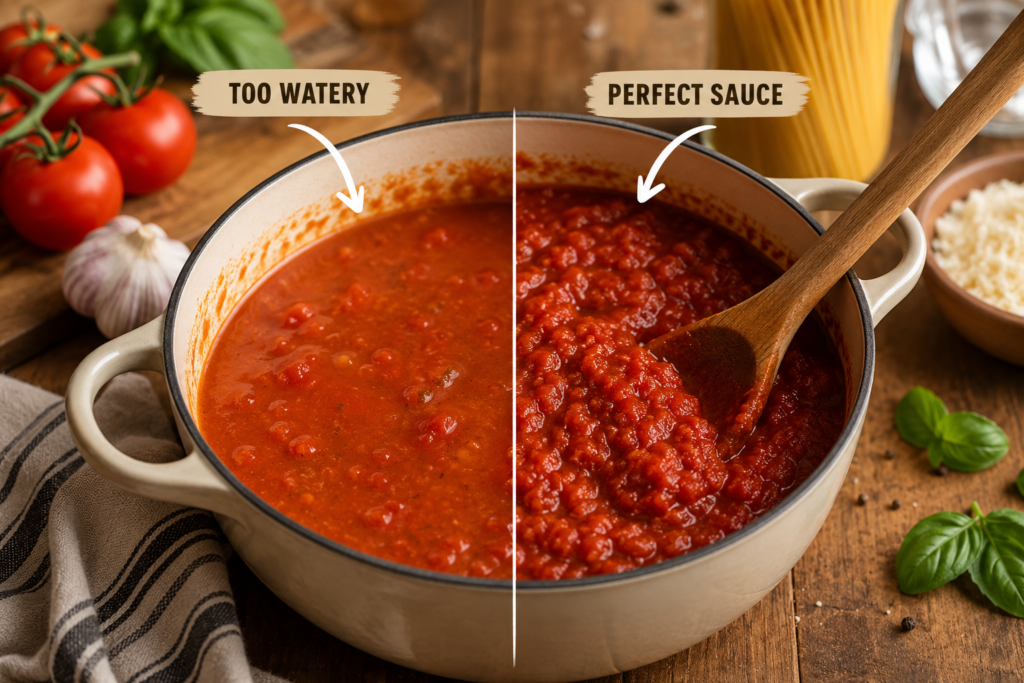
Watery pasta sauce is one of the most common kitchen frustrations, especially when you’ve spent time making a homemade sauce only to find it pooling at the bottom of your bowl instead of coating your pasta.
The good news is that thin pasta sauce is usually easy to fix. Whether your sauce is too watery because of excess liquid, incorrect cooking time, pasta water, vegetables releasing moisture, or simply not enough reduction, a few simple techniques can help you create a rich, thick, restaurant-style sauce that clings perfectly to your pasta.
Why Is My Pasta Sauce Watery?
The main reason pasta sauce becomes watery is that there is too much liquid compared to the ingredients that provide body and flavour.
A good pasta sauce should be thick enough to coat the pasta, not separate into a watery layer underneath. This comes down to balancing moisture, cooking time, ingredients, and technique.
Here are the most common reasons your pasta sauce turns out thin:
1. Your Sauce Has Not Reduced Enough
The most common reason for watery pasta sauce is simply that it has not cooked long enough.
When making homemade sauce, water needs time to evaporate. As the sauce simmers, the flavours concentrate and the texture becomes thicker.
If you rush this step, you may end up with a sauce that tastes diluted and watery.
How to fix it:
- Simmer your sauce uncovered for longer
- Stir occasionally to prevent sticking
- Allow extra time for excess liquid to evaporate
For tomato-based sauces, an extra 15–30 minutes of gentle simmering can make a huge difference.
2. You Added Too Much Pasta Water
Pasta water is often called “liquid gold” because the starch helps sauces cling to pasta. However, adding too much can quickly make your sauce thin.
A splash of pasta water can help loosen a thick sauce, but pouring in half a cup or more may leave your sauce watery.
How to fix it:
- Add pasta water gradually, one tablespoon at a time
- Allow the sauce to simmer after adding it
- Use only enough to help combine the sauce and pasta
Remember, you can always add more liquid, but you cannot easily remove it.
3. Your Tomatoes Contained Too Much Water
Fresh tomatoes and some canned tomatoes naturally contain a lot of moisture.
Some cheaper canned tomato products can also have more liquid than pulp, which can result in a thinner sauce.
How to fix it:
- Choose good-quality canned tomatoes with more tomato flesh
- Drain excess liquid from very watery canned tomatoes
- Cook tomato sauces longer to concentrate flavour
- Add tomato paste to increase richness
Tomato paste is one of the easiest ways to add depth and thickness without making your sauce heavy.
4. You Added Vegetables That Release Water
Vegetables are packed with flavour, but many also contain a lot of moisture.
Common culprits include:
- Mushrooms
- Zucchini
- Spinach
- Fresh tomatoes
- Eggplant
- Frozen vegetables
If vegetables are added straight into your sauce, they can release water as they cook.
How to fix it:
- Cook vegetables separately first
- Allow moisture to evaporate before adding sauce ingredients
- Avoid overcrowding the pan
For mushrooms especially, cooking them until golden before adding sauce creates much better flavour and texture.
5. Your Sauce Ingredients Were Not Balanced
A great pasta sauce needs a balance between liquid, fat, solids, and flavour.
A sauce may become watery if it has:
- Too much stock
- Too much milk or cream
- Too many tomatoes compared with other ingredients
- Not enough tomato paste, cheese, meat, or vegetables
How to fix it:
Balance your sauce by adding ingredients that provide thickness:
- Tomato paste
- Parmesan cheese
- Cream cheese
- Grated cheese
- Cooked minced meat
- Mashed vegetables
6. You Did Not Toss the Pasta and Sauce Together
Sometimes the sauce itself is fine, but it appears watery because the pasta was served separately.
Restaurants usually finish pasta by combining the pasta and sauce together in the pan.
This allows the starch from the pasta to help bind everything together.
The better method:
- Cook pasta until slightly under al dente
- Add pasta directly into the sauce
- Toss together for 1–2 minutes
- Add a small splash of pasta water if needed
This creates a smoother, better-coated pasta dish.
How to Thicken Watery Pasta Sauce Quickly
If your pasta sauce is already made and sitting on the stove, try these quick fixes.
Simmer Uncovered
The easiest fix is usually the best.
Cook the sauce uncovered over medium-low heat until the excess moisture evaporates.
Add Tomato Paste
Tomato paste adds:
- Thickness
- Rich tomato flavour
- Deeper colour
Start with 1 tablespoon and allow it to cook into the sauce.
Add Parmesan Cheese
Finely grated parmesan melts into the sauce and helps create a thicker, richer texture.
This works especially well for creamy pasta sauces.
Add a Butter Finish
A small amount of butter stirred through at the end can help create a smoother, glossy sauce.
Add a Cornflour Slurry (Emergency Fix)
While not traditional for Italian sauces, a small amount of cornflour mixed with water can thicken a sauce quickly.
Use sparingly because too much can create a starchy texture.
How to Prevent Watery Pasta Sauce Next Time
A few simple habits can stop this problem before it starts.
Cook Sauce Long Enough
Most homemade sauces improve with time. A longer simmer allows flavours to develop and excess moisture to disappear.
Season as You Go
Adding salt early helps draw out moisture and allows flavours to build throughout cooking.
Use the Right Pasta-to-Sauce Ratio
Too much pasta compared with sauce can make the dish feel dry, while too much sauce can make it appear watery.
A good rule is to have enough sauce to generously coat every piece of pasta.
Reserve Pasta Water Carefully
Save pasta water, but use it slowly.
Start with a tablespoon or two and only add more if needed.
Choose Better Ingredients
Quality ingredients make a noticeable difference.
For tomato sauces:
- Use good-quality canned tomatoes
- Add tomato paste for richness
- Use fresh herbs near the end of cooking
For creamy sauces:
- Use full-fat dairy where possible
- Avoid adding too much milk at once
- Allow sauces to gently thicken before serving
Can You Fix Pasta Sauce That Is Already Mixed With Pasta?
Yes, but it depends on how watery it is.
If there is only a small amount of excess liquid:
- Return everything to a pan
- Heat gently
- Allow the sauce to reduce
If it is very watery:
- Drain some liquid carefully
- Add extra sauce ingredients
- Mix through parmesan or tomato paste depending on the sauce type
Why Does My Pasta Sauce Separate?
A sauce that separates is usually caused by:
- Too much liquid
- Sauce overheating
- Cream or cheese added too quickly
- Not enough emulsification
To fix a separated sauce:
- Lower the heat
- Stir gently
- Add a small amount of pasta water
- Add cheese gradually
Common Pasta Sauce Mistakes
Avoid these mistakes for better homemade pasta every time:
❌ Adding too much pasta water
❌ Not allowing sauce to reduce
❌ Using watery tomatoes without adjusting
❌ Adding cream over high heat
❌ Skipping the step of tossing pasta with sauce
❌ Serving immediately without allowing flavours to combine
Saavy Budget-Friendly Tip
Making your own pasta sauce is one of the easiest ways to save money in the kitchen.
A simple homemade tomato sauce made with canned tomatoes, onion, garlic, herbs, and tomato paste can cost a fraction of store-bought jars while giving you better flavour and fewer unnecessary ingredients.
Batch cooking sauce and freezing portions means you always have a quick homemade dinner option ready for busy nights.
Frequently Asked Questions
How do you thicken pasta sauce without flour?
The best ways are reducing the sauce, adding tomato paste, parmesan cheese, cream cheese, or allowing the sauce to simmer uncovered.
Why is my tomato sauce watery after adding pasta?
The pasta may have released extra water, or too much pasta water was added. Simmer the sauce uncovered to reduce excess liquid.
Does simmering pasta sauce make it thicker?
Yes. Simmering allows water to evaporate, concentrating flavours and creating a thicker sauce.
Can I use flour to thicken pasta sauce?
You can, but it is usually not the best option. Reducing the sauce or adding ingredients like tomato paste or cheese creates better flavour.
Why does my homemade Alfredo sauce become watery?
Alfredo sauce can become thin if too much milk or pasta water is added, or if the cheese does not properly melt into the sauce.
Keep Solving Your Kitchen Problems
If you’re enjoying our cooking tips, here are a few more guides to help make everyday cooking easier:
- Why Is My Chicken Bland?
- Why Is My Pasta Mushy?
- How to Tell When Chicken Is Cooked Without Cutting Into It
- How Much Pasta Per Person?
Looking for recipes to put your perfectly cooked rice to good use? Try our Creamy Chicken and Rice Bake or browse our Easy Family Dinners collection for more budget-friendly meals the whole family will love.
If you’re struggling with other common kitchen problems, explore our Cooking Problems Hub for simple fixes, troubleshooting tips, and easy ways to improve your results in the kitchen.