
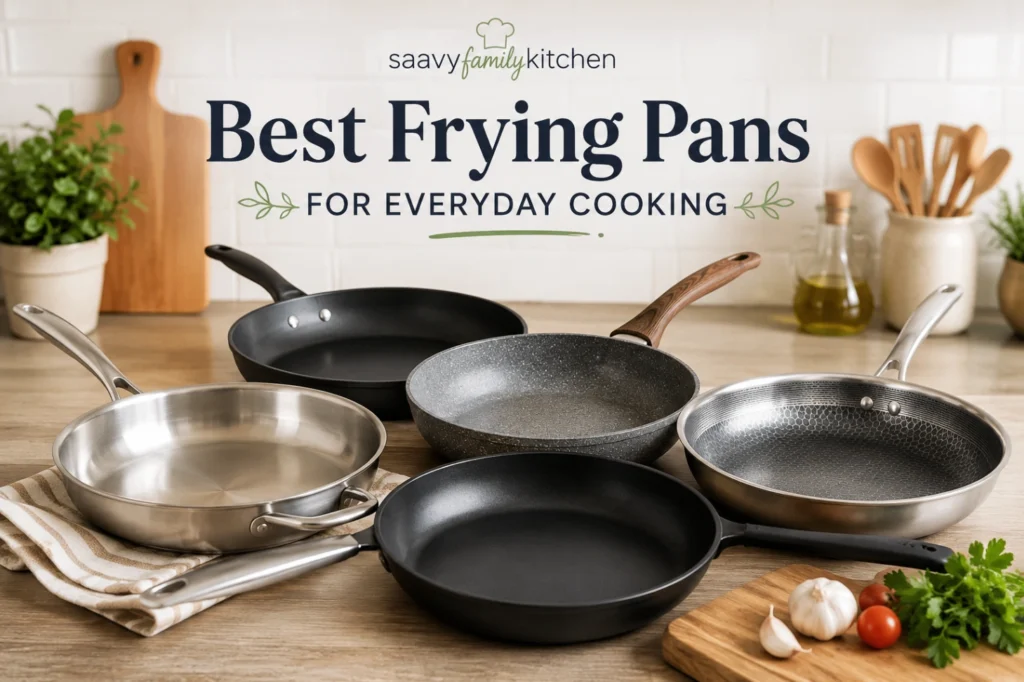
Best Frying Pans for Everyday Cooking
A good frying pan is one of those kitchen essentials you’ll reach for again and again. From cooking eggs and pancakes in the morning to frying chicken, sautéing vegetables or making a quick one-pan dinner, the right frying pan can make everyday cooking much easier.
But finding the best frying pan for everyday cooking isn’t necessarily about buying the most expensive one. Different pans work better for different foods, cooking methods and budgets.
Non-stick pans are convenient and easy to clean, stainless steel is excellent for browning and searing, while cast iron and carbon steel are popular choices for high-heat cooking and long-term durability.
In this guide, we’ll look at the different types of frying pans, what features are actually worth paying for, which size makes the most sense for a family kitchen, and how to choose a pan you’ll use regularly rather than one that ends up sitting at the back of the cupboard.
Quick Snapshot
If you just want the short version, here’s where we’d start when choosing a frying pan for everyday cooking:
- Best for easy everyday cooking: A quality non-stick frying pan
- Best for browning and searing: Stainless steel
- Best for durability: Cast iron
- Best for high-heat cooking: Carbon steel
- Best size for most families: 26–28cm
- Best budget approach: Buy one good everyday pan rather than a large cookware set
- Best overall strategy: Start with a non-stick pan, then add stainless steel if you need more versatility
The right choice ultimately comes down to how you cook. If you mainly want easy weeknight meals and simple cleanup, non-stick is hard to beat. If you love getting a good sear on meat or want a pan that can last for many years, stainless steel, cast iron or carbon steel may be a better investment.
Our Pick for Everyday Cooking
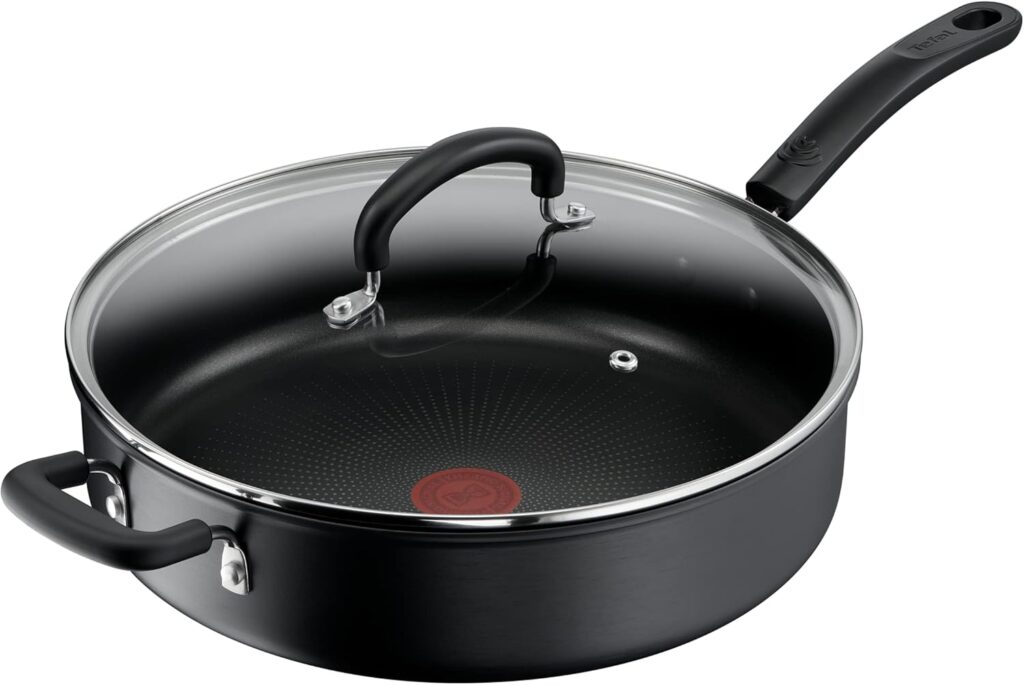
Best 26–28cm Non-Stick Frying Pan
The Tefal Specialty Hard Anodised 30cm Sautepan is a great family-friendly option, with a durable non-stick surface, generous capacity and included lid. It’s ideal for one-pan meals, sautéing vegetables and cooking larger portions.
What Makes a Good Everyday Frying Pan?
You don’t need a complicated frying pan with every possible feature. For everyday family cooking, a few basics matter much more than clever extras or a high price tag.
The Right Size
For most home kitchens, 26–28cm is a useful everyday size.
A 24cm pan can be handy for smaller portions, while a 28cm pan gives you more room for family meals, chicken pieces, vegetables and one-pan dinners.
If you’re only buying one frying pan for a family kitchen, we’d lean towards a 26–28cm pan.
Even Heat Distribution
A good frying pan should heat reasonably evenly across the cooking surface.
Cheap, very thin pans can develop hot spots, making it harder to cook food evenly. A solid base and good construction can help distribute heat more consistently.
A Comfortable Handle
It’s easy to overlook the handle when you’re comparing pans, but you’ll notice it every time you cook.
Look for a handle that feels secure and comfortable in your hand and gives you good control when lifting or moving the pan.
If you want to move the pan from the stovetop into the oven, also check whether the handle and pan are oven-safe.
Cooktop Compatibility
Always check that the frying pan is suitable for your cooktop, particularly if you have induction.
Not every pan works with induction, and compatibility can vary between different cookware ranges.
Easy Cleaning
For busy family kitchens, easy cleanup is worth considering.
Non-stick pans are particularly convenient for foods such as eggs, pancakes and fish, while stainless steel can require a little more attention when food sticks to the surface.
Good Construction
A pan doesn’t have to be expensive to be useful, but extremely lightweight cookware isn’t always the best choice.
Look for a pan that feels sturdy, sits flat on the cooktop and feels balanced when you lift it. A well-made pan is more likely to become one of those kitchen tools you reach for regularly.
The Best Types of Frying Pans
There isn’t one frying pan that’s perfect for every type of cooking. The best choice depends on what you make most often, how much maintenance you’re prepared to do, and how much you want to spend.
Here are the main types you’ll come across when shopping for an everyday frying pan.
Non-Stick Frying Pans
Best for: Easy everyday cooking and simple cleanup.
Non-stick pans are a popular choice for busy home kitchens because food is less likely to stick to the surface. They’re particularly useful for eggs, omelettes, pancakes, fish and other delicate foods.
They’re also a good option if you want a frying pan that’s easy to clean after a quick weeknight meal.
The main downside is that the coating won’t last forever, particularly if the pan is overheated or isn’t cared for according to the manufacturer’s instructions.
Stainless Steel Frying Pans
Best for: Browning, searing and versatile everyday cooking.
Stainless steel is a great option if you want a durable pan that can handle higher temperatures and develop good browning on meat and vegetables.
The learning curve is a little higher than with non-stick. Food can stick if the pan isn’t heated properly or you try to move food before it has had a chance to brown.
Once you get used to cooking with it, though, stainless steel can be an excellent everyday workhorse.
Cast Iron Frying Pans
Best for: High-heat cooking, steaks and long-term durability.
Cast iron is known for being extremely durable and holding heat well. It’s particularly useful for steaks, burgers, roasted vegetables and dishes that benefit from a hot cooking surface.
The biggest drawback is the weight. A cast iron pan can be considerably heavier than other frying pans, and it also needs a little more care to keep the cooking surface in good condition.
Carbon Steel Frying Pans
Best for: High-heat cooking and searing.
Carbon steel offers many of the benefits people like about cast iron while generally being lighter and more responsive to changes in temperature.
With proper seasoning, the surface can become naturally more non-stick over time.
The trade-off is that carbon steel requires more care than a conventional non-stick pan, so it’s better suited to cooks who don’t mind a little maintenance.
Ceramic Non-Stick Frying Pans
Best for: People who want a smooth, easy-release cooking surface.
Ceramic-coated pans are another option for everyday cooking. They can be particularly useful for foods that tend to stick and are often marketed as an alternative to traditional non-stick coatings.
As with other coated cookware, the cooking surface can wear over time, so proper use and care are important.
Which Type Is Best for You?
For most households, you don’t need one of every type.
A good non-stick frying pan is a practical starting point for everyday meals, while a stainless steel pan can complement it if you regularly sear meat, brown vegetables or make pan sauces.
Cast iron and carbon steel are worth considering if you specifically want their high-heat cooking abilities and long-term durability.
Best Non-Stick Frying Pan for Everyday Cooking
If you want a frying pan that’s easy to use, easy to clean and suitable for a wide range of everyday meals, non-stick is hard to beat.
A good non-stick frying pan is particularly useful for foods that can be difficult to cook in other cookware, including eggs, omelettes, pancakes and delicate fish. It’s also handy for quick family meals when you don’t want to spend ages scrubbing the pan afterwards.
What to Look For in a Non-Stick Frying Pan
Not all non-stick pans are made the same. When comparing options, look for:
- A sturdy base that sits flat on your cooktop
- Even heat distribution to reduce hot spots
- A comfortable, secure handle
- A durable cooking surface from a reputable manufacturer
- The right size for your household
- Induction compatibility if required
- Oven-safe construction if you want to finish dishes in the oven
- Clear care instructions so you know how to protect the coating
Why Non-Stick Works So Well for Everyday Cooking
The biggest advantage is convenience.
You can use less cooking oil, food is less likely to stick, and cleaning is generally quick and straightforward. That’s particularly useful when you’re cooking several meals a week and don’t want cookware that requires a lot of maintenance.
Non-stick is also a good choice for newer cooks because you don’t need to master the same temperature and timing techniques required when cooking with stainless steel.
The Downsides
The biggest disadvantage is that the coating won’t last forever.
Overheating an empty pan, using unsuitable utensils or cleaning it too aggressively can shorten its useful life. Even with good care, a non-stick surface will eventually lose some of its performance.
For that reason, I wouldn’t necessarily spend a huge amount of money on a non-stick pan simply because it’s marketed as premium.
Our Saavy Tip
If you’re buying your first everyday frying pan, a good-quality 26–28cm non-stick pan is a sensible place to start.
You don’t need a complete set. Buy one pan you’ll use regularly, look after it properly, and only add another type of frying pan when you have a genuine need for it.
Best Stainless Steel Frying Pan for Everyday Cooking
If you want a frying pan that’s built for browning, searing and long-term everyday use, stainless steel is a strong choice.
Unlike non-stick cookware, stainless steel doesn’t have a coating that gradually wears away. A good-quality stainless steel frying pan can handle higher temperatures and is particularly useful when you want to develop a golden crust on meat or vegetables.
It’s also a versatile choice for cooking everything from chicken and steak to vegetables, fish and pan sauces.
Our Pick for the Best Stainless Steel Frypan
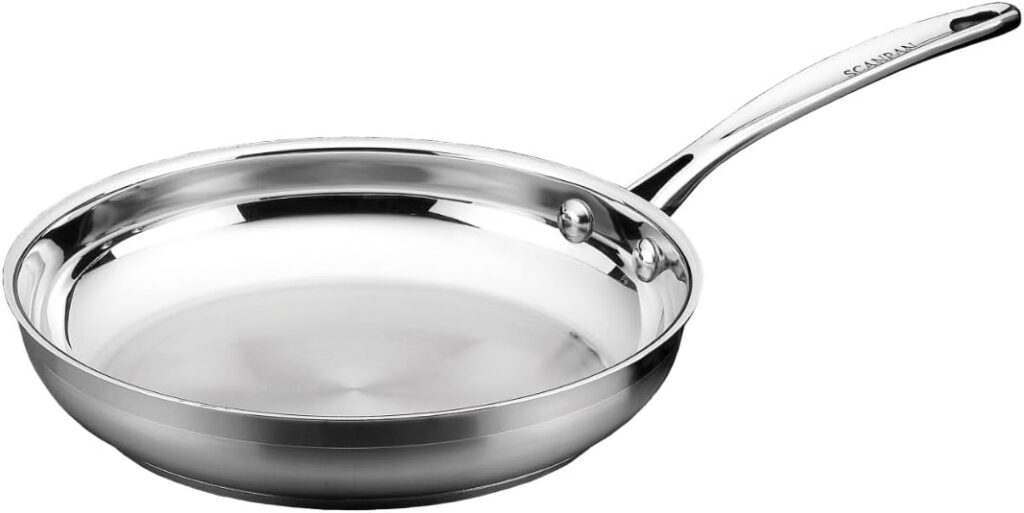
Scanpan Impact Stainless Steel Frypan
A practical stainless steel option for browning, searing and everyday cooking, with a sturdy construction designed for regular use.
What Makes Stainless Steel a Good Choice?
Stainless steel has several advantages:
- Excellent for browning and searing
- Handles higher cooking temperatures
- Durable and long-lasting
- Doesn’t rely on a non-stick coating
- Suitable for a wide range of cooking methods
- Generally resistant to scratches from normal cooking utensils
- Easy to use on the stovetop and, depending on the pan, in the oven
A well-made stainless steel pan can become a genuine workhorse in your kitchen.
The Learning Curve
The main complaint people have about stainless steel is that food sticks.
Usually, this comes down to technique rather than the pan itself.
Allow the pan to heat properly before adding your cooking oil and food. Once food has started to brown and form a crust, it will often release more easily from the cooking surface.
This can take a little practice, particularly if you’re used to non-stick cookware.
What to Look For
When choosing a stainless steel frying pan, consider:
- A substantial base for more even heating
- Multi-layer or clad construction if your budget allows
- A comfortable handle
- Induction compatibility if needed
- Oven-safe construction if you want extra versatility
- A size of around 26–28cm for everyday family cooking
Is Stainless Steel Worth Paying More For?
This is one area where spending a little more can make sense.
A well-constructed stainless steel pan can last for many years, so you’re buying something that doesn’t necessarily need replacing every few years.
That doesn’t mean you need the most expensive pan available. Look for good construction and practical features rather than paying simply for a premium brand name.
Our Saavy Tip
If you already have a good non-stick pan, a 26–28cm stainless steel frying pan is probably the next piece of cookware we’d add.
The two complement each other well: use non-stick when convenience matters most and stainless steel when you want better browning, searing or high-heat cooking.
Best Cast Iron Frying Pan for Everyday Cooking
Cast iron is the traditional workhorse of the kitchen. It’s heavy, holds heat extremely well and can handle high temperatures, making it a great choice for cooking foods that benefit from a hot, sturdy cooking surface.
It’s particularly useful for steaks, burgers, crispy potatoes, roasted vegetables and hearty one-pan meals.
Our Pick for the Best Cast Iron Frypan
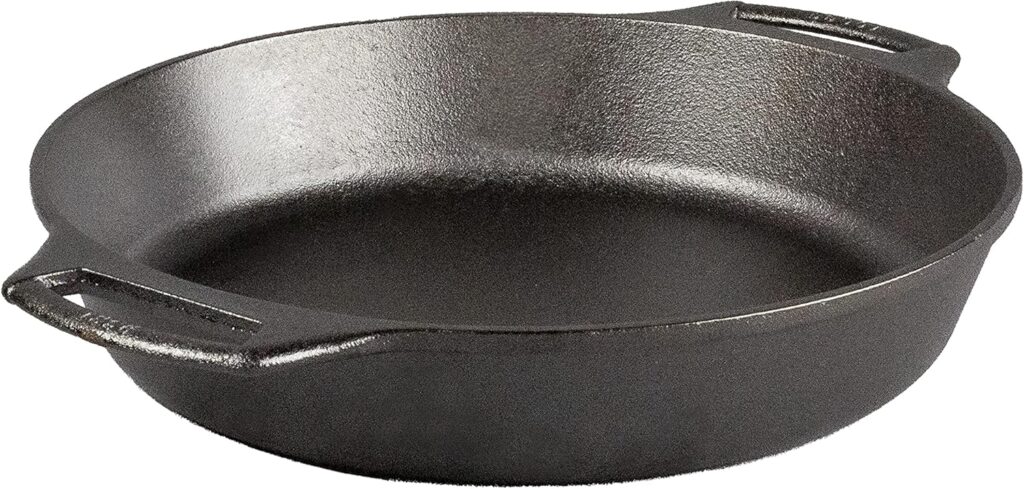
Lodge Cast Iron Pan 26cm
A durable, pre-seasoned cast iron pan that’s excellent for searing, frying and high-heat cooking. It’s a great choice if you want cookware that can last for years with proper care.
Why Choose Cast Iron?
A good cast iron frying pan offers several advantages:
- Excellent heat retention
- Great for high-temperature cooking
- Very durable
- Suitable for stovetop-to-oven cooking when designed for it
- Can last for decades with proper care
- Works well for searing and browning
It’s also one of those pieces of cookware that can become a long-term kitchen staple rather than something you replace every few years.
The Downsides
The biggest issue is the weight.
A large cast iron pan can be surprisingly heavy before you’ve even added your food. If you have difficulty lifting heavier cookware or simply prefer lightweight pans, stainless steel or non-stick may be a better everyday choice.
Cast iron also requires more care than non-stick cookware. Depending on the type of pan, you’ll need to maintain its seasoning and make sure it is dried properly after cleaning.
What Size Should You Choose?
For most home cooks, a 26–28cm cast iron frying pan offers a useful balance between cooking space and manageability.
A larger pan can be useful for family meals, but remember that the weight increases as the pan gets bigger.
Is Cast Iron Worth Buying?
If you regularly cook steaks, burgers or other foods that benefit from high heat, absolutely.
If most of your cooking involves quick meals, eggs and delicate foods, however, you may find a non-stick pan much more convenient.
Our Saavy Tip
You don’t need cast iron simply because it’s considered a kitchen classic.
If you enjoy using it and appreciate its durability, it’s an excellent investment. But if a heavy pan is going to make you avoid using it, buy the cookware that fits your cooking habits instead.
The best kitchen tool isn’t necessarily the one with the longest lifespan – it’s the one you’ll actually reach for.
Best Carbon Steel Frying Pan for Everyday Cooking
Carbon steel is a great option for cooks who want something durable and capable of handling high heat, without the weight of traditional cast iron.
It’s particularly popular for searing, stir-frying, sautéing and cooking foods that benefit from a very hot pan.
With regular seasoning and proper care, carbon steel can develop a naturally slick cooking surface that becomes easier to cook on over time.
Why Choose Carbon Steel?
Carbon steel offers several useful advantages:
- Excellent for high-heat cooking
- Heats up relatively quickly
- Lighter than cast iron
- Very durable
- Good for searing and browning
- Can develop a naturally non-stick surface with seasoning
- Suitable for stovetop cooking and, with the right pan, oven use
It’s a particularly good choice if you enjoy cooking from scratch and don’t mind giving your cookware a little extra attention.
The Downsides
Carbon steel isn’t quite as carefree as non-stick.
It needs to be seasoned and maintained properly to develop and preserve its cooking surface. You also need to take care with moisture to help prevent rust.
It’s therefore not necessarily the best choice if your priority is simply to cook dinner and throw the pan in the dishwasher.
Carbon Steel vs Cast Iron
The two are similar, but there are some practical differences.
Carbon steel is generally lighter and more responsive to temperature changes, making it useful for stir-fries and cooking where you want to adjust the heat quickly.
Cast iron is heavier and holds heat exceptionally well, making it particularly good for searing and oven cooking.
Neither is automatically better. It comes down to what feels comfortable and useful in your kitchen.
Is Carbon Steel Worth Buying?
If you enjoy high-heat cooking and don’t mind maintaining your cookware, carbon steel can be an excellent long-term investment.
If you want something that requires very little maintenance, however, you’re probably better off with a good non-stick or stainless steel frying pan.
Our Saavy Tip
Don’t buy carbon steel because it’s trendy.
Buy it because you actually want the benefits it offers.
For most families, a carbon steel pan is an optional addition rather than a kitchen essential. Start with the frying pan you use most often, then add carbon steel later if it suits the way you cook.
What Size Frying Pan Should You Buy?
Choosing the right size is just as important as choosing the right material. A pan that’s too small can leave food crowded and make cooking frustrating, while a pan that’s too large may be awkward to handle and take longer to heat.
For most home cooks, 24–28cm frying pans cover the majority of everyday cooking needs.
20–22cm Frying Pan
Best for smaller portions and simple jobs such as:
- Cooking one or two eggs
- Heating small portions
- Cooking for one person
- Making small side dishes
This can be useful as a second pan, but it’s probably too small to be your only frying pan if you’re cooking for a family.
24cm Frying Pan
A useful size for:
- Couples
- Smaller meals
- Fish fillets
- Eggs and omelettes
- Smaller portions of vegetables
It’s a good compromise if you don’t have much storage or cooktop space.
26cm Frying Pan
One of the most versatile sizes for everyday cooking.
A 26cm pan gives you enough space for chicken, vegetables, eggs and many quick family meals without becoming excessively large or heavy.
If you’re cooking for two to four people, this is a very practical choice.
28cm Frying Pan
For family cooking, 28cm is our pick when you want plenty of room.
It’s useful for:
- Multiple pieces of chicken
- Stir-fries
- Family breakfasts
- Sautéed vegetables
- One-pan dinners
- Larger portions
The extra cooking surface also helps prevent food from becoming overcrowded.
30cm+ Frying Pan
Larger pans can be useful for big families or when you’re regularly cooking large quantities.
However, they can also be heavier and may not fit comfortably on smaller cooktops.
There’s no point buying a huge pan if it’s difficult to store or awkward to use.
What Size Is Best for a Family?
For most families, we’d choose 26–28cm.
If you’re only buying one frying pan, a 28cm pan gives you plenty of versatility. If you prefer something slightly lighter and easier to handle, a 26cm pan is an excellent alternative.
And remember: you don’t need three different sizes just because a cookware set includes them.
Buy the size you will actually use.
How Much Should You Spend on a Frying Pan?
Frying pans can range from inexpensive supermarket options to premium cookware costing well over $100. That can make it difficult to know whether you’re getting genuine value or simply paying for a brand name.
The good news is that you don’t need to spend a fortune to get a useful everyday frying pan.
Budget Frying Pans
A basic frying pan can be a perfectly reasonable choice if you’re setting up a kitchen on a tight budget.
Look for:
- A sturdy base
- Even heating
- A comfortable handle
- The right size
- Good cooktop compatibility
- Reasonable reviews and warranty support
Rather than choosing the absolute cheapest option, look for the best balance between price and construction.
A $20 pan that needs replacing very quickly may not actually be cheaper than spending $40–$60 on something that lasts considerably longer.
Mid-Range Frying Pans
This is where we’d generally look for an everyday family frying pan.
A mid-range pan can offer better construction, more even heating and a more comfortable design without pushing the price into premium cookware territory.
For many home cooks, this is likely to offer the best balance between performance and value.
Premium Frying Pans
Premium cookware can be worth considering if you cook frequently and expect your pan to last for many years.
You may be paying for:
- Higher-quality materials
- Multi-layer construction
- Better heat distribution
- More durable finishes
- Better handles
- Longer warranties
- Australian or European manufacturing, depending on the brand
But don’t assume that a more expensive pan will automatically produce better meals.
Think About Cost Per Year
One useful way to look at cookware is cost per year rather than purchase price.
For example, a $40 pan that lasts two years costs around $20 per year.
A $150 pan that lasts ten years costs around $15 per year.
The more expensive pan may therefore provide better long-term value — but only if it actually lasts that long and you enjoy using it.
Our Saavy Approach
For a budget-conscious family kitchen, we’d rather see you buy one good frying pan that you’ll use constantly than spend your money on a large cookware set filled with pieces you rarely touch.
Start with the essentials. Upgrade when there’s a genuine reason to do so.
That’s usually a much better way to build a useful kitchen without overspending.
What Frying Pan Features Are Worth Paying For?
When you’re comparing frying pans, it’s easy to get distracted by long lists of features. Some can genuinely make a difference to how the pan performs, while others aren’t necessarily worth paying extra for.
For a practical family kitchen, we’d focus on the features you’ll notice every time you cook.
A Sturdy, Evenly Heating Base
This is one of the features I’d prioritise.
A well-constructed base can help distribute heat more evenly and reduce hot spots. It also helps the pan sit securely on your cooktop.
You don’t necessarily need the thickest or most expensive pan, but avoid cookware that feels excessively flimsy.
A Comfortable Handle
A frying pan should feel balanced when you pick it up.
Look for a handle that feels secure, isn’t awkward to grip and gives you good control when moving the pan around the cooktop.
If you regularly cook larger meals, this becomes even more important because the pan can become quite heavy once it’s full.
Induction Compatibility
If you have an induction cooktop, this is essential rather than optional.
Always check the manufacturer’s specifications rather than assuming a particular material will work.
Oven-Safe Construction
An oven-safe frying pan can be incredibly useful for one-pan meals.
You can brown meat or vegetables on the stovetop and then transfer the whole pan into the oven without dirtying another dish.
Just check the maximum oven temperature and whether the handle is also oven-safe.
A Durable Cooking Surface
If you’re buying non-stick cookware, the quality and durability of the coating matter.
Follow the manufacturer’s care instructions and avoid overheating the pan or using utensils that aren’t recommended for the cooking surface.
A Useful Size
Don’t pay extra for a pan simply because it’s large.
For most family kitchens, 26–28cm offers plenty of cooking space without becoming unnecessarily heavy or difficult to store.
A Good Warranty
A warranty can be particularly useful when you’re spending more on cookware.
It doesn’t necessarily mean a pan will last forever, but it can give you some protection if there is a genuine manufacturing problem.
Features We Would Prioritise
If we were comparing two similar frying pans, we’d prioritise:
Good construction → even heating → comfortable handle → suitable size → cooktop compatibility → easy care.
Fancy extras would come much further down the list.
Frying Pan Features You Don’t Necessarily Need
It’s just as useful to know what not to pay for as it is to know what features are worth having.
Cookware marketing can make it sound as though you need a specialised pan for every possible cooking task. In reality, most home kitchens can get by with a small collection of versatile, well-made pans.
Huge Cookware Sets
A 10 or 12-piece cookware set might look like good value, but check what you’re actually getting.
You may end up with several frying pans and saucepans in almost identical sizes, along with pieces you rarely use.
Buying individual pieces lets you spend your money on the cookware you actually need.
Multiple Nearly Identical Frying Pans
If you already have a good 28cm frying pan, you probably don’t need another three pans in slightly different sizes unless you regularly cook several dishes at once.
Start with one versatile pan and add another when there’s a genuine need.
Expensive Finishes and Colours
A beautiful pan can certainly make your kitchen look good, but a particular colour or decorative finish doesn’t necessarily make it cook better.
If you’re trying to keep your kitchen budget under control, put performance and durability ahead of appearance.
The Most Expensive Brand
A premium price doesn’t automatically mean a better frying pan.
Look at the construction, materials, size, warranty and features rather than choosing purely based on the brand name.
Gadgets Built Into the Pan
Temperature indicators, clever lids and other extras can be useful in some circumstances, but they’re not essential for everyday frying.
If a feature genuinely makes cooking easier for you, that’s different. Just don’t pay extra for something you’ll rarely use.
A Pan That Claims to Do Everything
It’s tempting to buy a pan marketed as the one piece of cookware you’ll ever need.
But different materials have different strengths.
A non-stick pan is excellent for delicate foods and easy cleanup, while stainless steel is better suited to high-heat browning and searing.
Rather than looking for one magical pan, build a small collection around the way you actually cook.
Our Saavy Tip
Before buying a new frying pan, ask yourself:
What problem am I trying to solve?
If your current pan is too small, buy a larger one.
If food keeps sticking, consider whether you need a good non-stick pan.
If you’re struggling to get a good sear, stainless steel or cast iron might be the better addition.
That simple approach can save you from buying kitchen tools that end up gathering dust.
What I’d Buy for a Family Kitchen
If I were setting up a family kitchen from scratch, I wouldn’t buy a cupboard full of frying pans.
I’d start with one good everyday pan, then add another type when there’s a genuine need for it.
1. A 26–28cm Non-Stick Frying Pan
This would be my first choice for most families.
It’s useful for:
- Eggs and omelettes
- Pancakes
- Fish
- Chicken
- Vegetables
- Quick weeknight meals
The easy cleanup is a big bonus when you’re cooking regularly.
2. A 26–28cm Stainless Steel Frying Pan
This would be my second addition.
Stainless steel gives you something that non-stick doesn’t do quite as well: browning and searing.
It’s useful for steaks, chicken, vegetables and dishes where you want to build flavour in the pan.
3. Add Cast Iron or Carbon Steel Only If You Need It
Once you’ve got the basics covered, you can consider cast iron or carbon steel.
They’re excellent for high-heat cooking, but they aren’t essential for every household.
If you love cooking steaks, making crispy potatoes or experimenting with high-heat cooking, they can be worthwhile.
If you mostly make quick family dinners, you may never miss them.
The Simple Setup
For most home cooks, I’d keep it simple:
One good non-stick pan + one good stainless steel pan = a very capable everyday kitchen.
You can always add another pan later.
There’s no prize for having the biggest cookware collection. The goal is to have useful tools that earn their space in your kitchen.
How to Make Your Frying Pan Last Longer
A good frying pan can be a worthwhile investment, but how you use and care for it will have a big impact on how long it stays in good condition.
The care your pan needs depends on the material, so always follow the manufacturer’s instructions first.
Look After Non-Stick Pans
Non-stick cookware generally benefits from gentle treatment.
- Avoid heating an empty pan for long periods.
- Use utensils recommended for the coating.
- Avoid harsh cleaning products and abrasive scrubbers.
- Don’t stack pans together without protection if the cooking surfaces can scratch.
- Follow the manufacturer’s dishwasher recommendations.
And if the coating becomes badly damaged or starts peeling, it’s time to replace the pan rather than trying to keep using it.
Don’t Be Afraid of Stainless Steel
Stainless steel can look intimidating when food sticks to it, but don’t assume you’ve ruined the pan.
Using the right heat, enough cooking fat and allowing food to brown before moving it can help reduce sticking.
If something does stick, soak the pan and clean it according to the manufacturer’s instructions.
Keep Cast Iron Dry
Cast iron needs a little more attention than non-stick or stainless steel.
After cleaning, dry it thoroughly and maintain the seasoning as recommended for your particular pan.
Avoid leaving water sitting on the surface for extended periods, as this can encourage rust.
Maintain Carbon Steel
Carbon steel also benefits from regular seasoning and careful drying.
Its cooking surface can improve with use, but it does require more attention than a conventional non-stick pan.
Avoid Extreme Temperature Changes
For many types of cookware, suddenly moving an extremely hot pan under cold water can cause unnecessary thermal stress.
Allow the pan to cool appropriately before cleaning, unless the manufacturer’s instructions say otherwise.
Don’t Overcrowd the Pan
This isn’t just about protecting your cookware — it also helps your food cook better.
When you pack too much food into a frying pan, the temperature can drop and food may steam rather than brown.
Giving ingredients enough room can improve both cooking results and the life of your pan.
Our Saavy Tip
The easiest way to make your frying pan last longer is surprisingly simple:
Use the right pan for the right job.
Don’t use your non-stick pan for extremely high-heat searing if the manufacturer doesn’t recommend it. Don’t expect cast iron to behave like non-stick straight out of the box.
Once you understand what your pan is designed to do, it’s much easier to get years of useful cooking from it.
Our Saavy Verdict: Which Frying Pan Is Best?
There isn’t one frying pan that is perfect for every kitchen. The best choice depends on what you cook, how often you cook and how much maintenance you’re prepared to do.
For most families, we’d keep things simple.
Best everyday choice: A good-quality 26–28cm non-stick frying pan for easy cooking and cleanup.
Best long-term option: A stainless steel frying pan if you want durability, browning and versatility.
Best for high-heat cooking: Cast iron or carbon steel, particularly if you enjoy searing steaks and cooking at higher temperatures.
Best budget strategy: Buy one good pan you’ll use regularly rather than a large cookware set filled with pieces you don’t need.
If you’re starting from scratch, we’d choose a non-stick pan first, then add stainless steel when you want more versatility. Cast iron or carbon steel can come later if they suit your cooking style.
Ultimately, the best frying pan isn’t necessarily the most expensive one. It’s the one that fits your kitchen, your budget and the way you actually cook.
A pan that gets pulled out several times a week is far better value than an expensive one that spends most of its life sitting in the cupboard.
Frequently Asked Questions About Frying Pans
What is the best frying pan for everyday cooking?
For most households, a 26–28cm non-stick frying pan is a practical everyday choice. It’s easy to use, works well for a wide range of foods and is generally simple to clean.
If you regularly sear meat or cook at higher temperatures, a stainless steel frying pan can be a useful second option.
Is stainless steel better than non-stick?
Neither is automatically better. They simply suit different types of cooking.
Non-stick is excellent for eggs, pancakes, fish and easy cleanup, while stainless steel is better for browning, searing and high-heat cooking.
For many kitchens, having one of each gives you the most flexibility.
What size frying pan is best for a family?
A 26–28cm frying pan is a good size for most family kitchens.
A 26cm pan is versatile and relatively easy to handle, while a 28cm pan gives you more room for larger portions and one-pan meals.
Are expensive frying pans worth it?
They can be, but you don’t need to spend a fortune.
A more expensive pan may offer better construction, heat distribution and durability, but price alone doesn’t guarantee better performance.
For a budget-conscious kitchen, look for the best combination of quality, useful features and price.
How long should a non-stick frying pan last?
There’s no single lifespan because it depends on the quality of the pan and how it’s used and cared for.
Avoid overheating, use suitable utensils and follow the manufacturer’s cleaning instructions. Replace the pan when the coating becomes significantly damaged or no longer performs properly.
Can you use metal utensils in a frying pan?
It depends on the type of pan.
Stainless steel and cast iron generally tolerate metal utensils, while many non-stick pans are better used with utensils recommended by the manufacturer.
Always check the care instructions for your particular pan.
Are cast iron frying pans good for everyday cooking?
They can be, particularly if you enjoy high-heat cooking, searing or dishes that benefit from excellent heat retention.
However, cast iron is heavy and requires more care than non-stick, so it isn’t necessarily the most convenient choice for every household.
Is carbon steel better than cast iron?
Neither is simply better.
Carbon steel is generally lighter and more responsive to temperature changes, while cast iron is heavier and holds heat exceptionally well.
Both can be excellent choices for high-heat cooking if you’re comfortable with the additional care they require.
What frying pan is best for induction?
Look for a frying pan specifically labelled induction compatible.
Don’t assume that every stainless steel, cast iron or non-stick pan will work with an induction cooktop. Check the manufacturer’s specifications before buying.
How many frying pans does a home kitchen need?
For most families, one good frying pan is enough to get started.
Adding a second pan in a different material can make sense if you cook a wider range of foods. For example, a non-stick pan paired with a stainless steel pan covers a large portion of everyday cooking without filling your cupboards with unnecessary cookware.
Related Kitchen Guides
Choosing the right frying pan is just one part of building a practical kitchen. If you’re working through your kitchen essentials, these guides can help you decide what is actually worth buying.
- Best Kitchen Essentials for Beginner Home Cooks – Start with the basic tools you need for everyday cooking without overspending.
- Best Kitchen Knives for Home Cooks – Find the essential knives that make chopping, slicing and food preparation easier.
- Best Soup Pots for Homemade Soup – Choose a practical pot for soups, stews and hearty family meals.
- Best Slow Cookers for Family Dinners – Compare slow cookers that can make busy weeknight meals easier.
- Kitchen Tools & Essentials – Browse our complete collection of practical kitchen buying guides and tips.
If you’re trying to build a kitchen on a budget, remember that you don’t need everything at once. Start with the tools you use most, then add to your collection as your cooking needs change.