
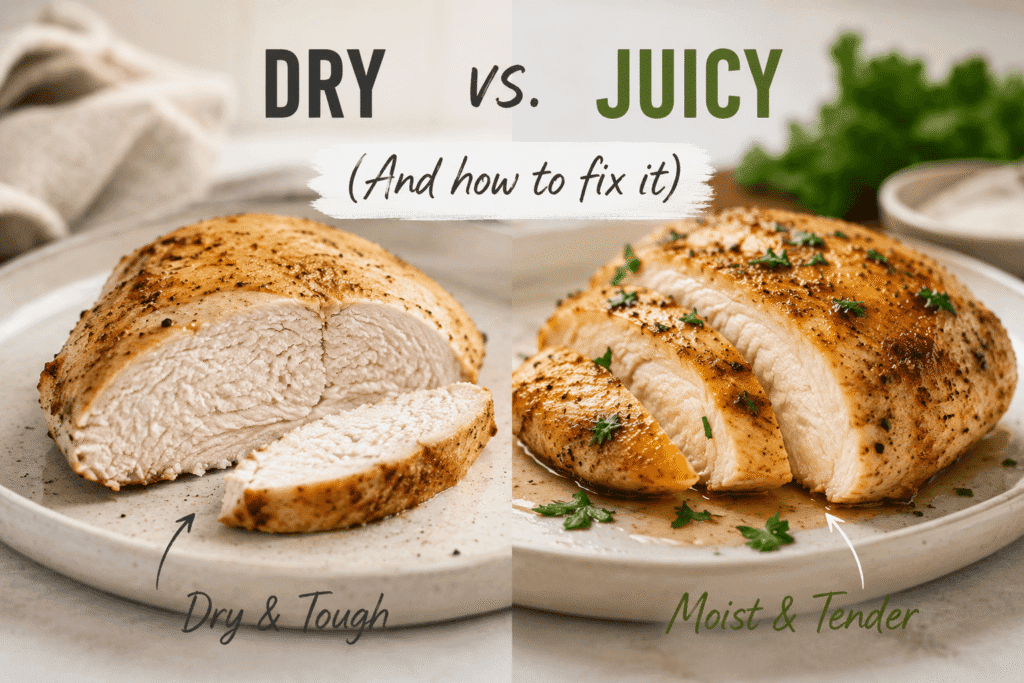
Why Is My Chicken Dry? (And How to Fix It)
You’ve followed the recipe, cooked the chicken until it’s done, and somehow it still ends up dry, chewy and disappointing.
If you’ve ever wondered “Why is my chicken dry?” you’re definitely not alone. Chicken is one of the easiest meats to overcook because it contains very little fat – especially chicken breast. Just a few extra minutes in the oven or pan can be the difference between juicy and tough.
The good news? Once you understand why chicken dries out, it’s surprisingly easy to avoid.
This guide explains the most common reasons chicken becomes dry, how to rescue overcooked chicken, and the simple habits that will help you cook perfectly juicy chicken every time.
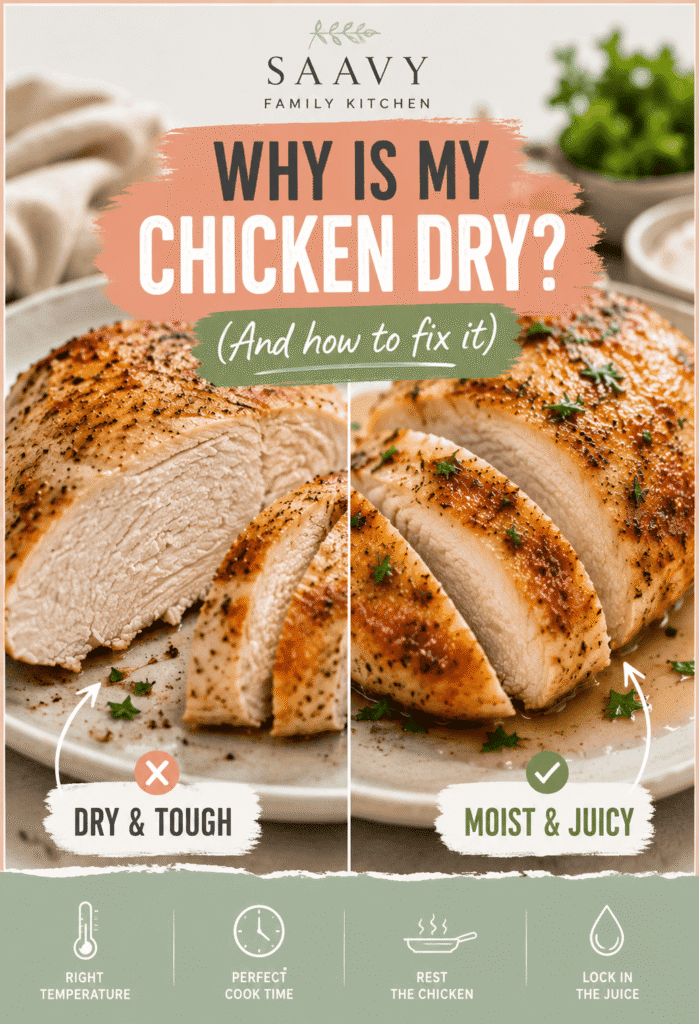
Why Chicken Becomes Dry
Chicken loses moisture as it cooks.
As the internal temperature rises, the muscle fibres tighten and squeeze out water. The longer it continues cooking after it’s reached a safe temperature, the more moisture it loses.
That’s why timing and temperature matter much more than simply following the cooking time in a recipe.
11 Reasons Your Chicken Is Dry
1. You’re Overcooking It
This is the number one cause of dry chicken. Use a meat thermometer and remove the chicken as soon as it reaches 75°C (165°F).
2. It’s Too Cold Before Cooking
Chicken straight from the fridge cooks unevenly. Let it sit for 15–20 minutes before cooking.
3. The Heat Is Too High
Very high heat dries out the outside before the centre is cooked. Medium or medium-high heat usually gives better results.
4. You’re Always Using Chicken Breast
Breast meat is very lean. Chicken thighs contain more fat and stay juicy much more easily, especially in casseroles and slow-cooked meals.
5. You Didn’t Rest It
Cutting into chicken straight away lets the juices escape. Rest breasts for 5–10 minutes and whole chickens for 15–20 minutes before slicing.
6. The Pieces Aren’t Even
If one piece is much thicker than another, they’ll cook at different rates. Pound thicker breasts to an even thickness before cooking.
7. You Didn’t Use Enough Fat
A light coating of olive oil or melted butter helps reduce moisture loss while improving browning.
8. You Skipped the Marinade
Marinades made with yoghurt, buttermilk or oil help keep chicken tender. Aim to marinate for at least 30 minutes, or up to 8 hours.
9. Your Oven Runs Hot
Many ovens aren’t as accurate as the dial suggests. An inexpensive oven thermometer can prevent accidental overcooking.
10. You’re Reheating It Incorrectly
Microwaving chicken uncovered dries it out. Add a splash of stock or water, cover it, and reheat gently.
11. Very Lean Chicken Can Dry Faster
Different brands vary in fat content. If you’re using especially lean chicken, you may need to shorten the cooking time slightly.
How to Rescue Dry Chicken
If it’s already overcooked, don’t throw it away.
Try one of these tricks:
Slice it thin
Thin slices feel more tender than thick chunks.
Add Sauce
Dry chicken improves dramatically when mixed with:
- Gravy
- Garlic butter
- Cream sauce
- Pesto
- BBQ sauce
- Teriyaki sauce
Shred It
Shredded chicken absorbs moisture much better than whole pieces.
Mix it with:
- Mayonnaise
- Greek yoghurt
- Salsa
- Buffalo sauce
Use It in Another Meal
Dry chicken works surprisingly well in:
- Fried rice
- Pasta bake
- Soup
- Quesadillas
- Burritos
- Chicken pot pie
Tips for Juicy Chicken Every Time
Follow these simple habits:
- Use a meat thermometer.
- Don’t cook longer “just to be safe.”
- Rest the chicken before slicing.
- Marinate when possible.
- Cook evenly sized pieces.
- Avoid very high heat.
- Use chicken thighs when appropriate.
- Reheat gently with added moisture.
Common Chicken Cooking Temperatures
| Cut | Safe Internal Temperature |
|---|---|
| Chicken breast | 75°C (165°F) |
| Chicken thighs | 75°C (165°F) |
| Chicken wings | 75°C (165°F) |
| Whole chicken | 75°C (165°F) in the thickest part |
Frequently Asked Questions – Dry Chicken
Why is my chicken dry but still undercooked?
This usually happens when the cooking temperature is too high. The outside cooks and dries out before the centre reaches a safe temperature. Lowering the heat slightly and using a meat thermometer helps the chicken cook more evenly.
Is dry chicken overcooked?
Most of the time, yes. Once chicken cooks beyond 75°C (165°F), it continues to lose moisture, making the meat tougher and drier.
Does brining stop chicken from drying out?
Yes. Brining helps chicken absorb extra moisture before cooking, making it more forgiving if it’s cooked a little longer than intended.
Is chicken thigh harder to dry out?
Yes. Chicken thighs contain more fat and connective tissue than chicken breast, so they stay juicy for longer during cooking.
Should I cover chicken while baking?
It depends on the recipe. Covering chicken for part of the cooking time can help retain moisture, while uncovering it near the end allows the surface to brown.
Saavy Family Kitchen Tips
Cooking juicy chicken doesn’t require expensive equipment or chef-level skills. The biggest improvement most home cooks can make is using a simple meat thermometer instead of relying on cooking times alone. Pair that with resting the chicken before slicing, and you’ll notice a huge difference in tenderness and flavour.
Remember too that different cuts suit different recipes. Chicken breasts are ideal for quick meals, while thighs are naturally more forgiving and stay juicy in casseroles, curries and slow-cooked dishes.
You Might Also Enjoy
If you’re building your kitchen confidence, these guides are a great next step:
- Why Is My Steak Tough? (And How to Make It Tender Every Time)
- Why Does My Rice Turn Out Mushy?
- How to Tell When Chicken Is Cooked Without Cutting Into It
- Best Budget Chicken Recipes for Busy Families
- Kitchen Guides (for more cooking tips, troubleshooting guides and beginner-friendly techniques)
These articles will help you solve common cooking problems and make everyday meals easier, tastier and more reliable. Once the coating is damaged, replacement is usually the safest and most effective option.