
Wondering whether your steak is actually done? It can be tricky to tell just by looking at it. The outside may be beautifully browned while the centre is still undercooked, or you may leave it cooking too long and end up with a dry, tough steak.
The most reliable way to tell when steak is done is to check its internal temperature with an instant-read meat thermometer. This takes the guesswork out of cooking and helps you get the level of doneness you want, whether you prefer rare, medium-rare, medium or well-done.
In this guide, we’ll show you the ideal temperatures for each level of steak doneness, how to check the temperature correctly, how to tell if steak is done without a thermometer, and the common mistakes that can leave you with an overcooked or undercooked steak.
Quick Answer: The Easiest Way to Tell When Steak Is Done
The easiest and most reliable way to tell if your steak is done is to use an instant-read meat thermometer. Insert it into the thickest part of the steak and check the internal temperature.
Remember that steak will continue cooking for a few minutes after you remove it from the heat, so it is best to take it off slightly before it reaches your final target temperature.
As a general guide:
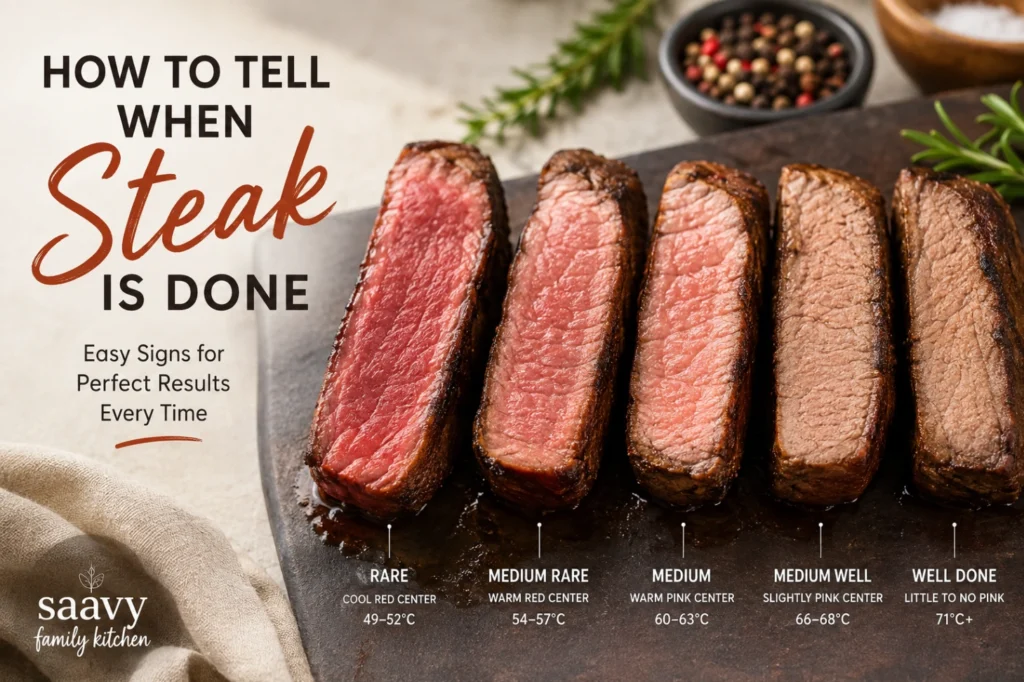
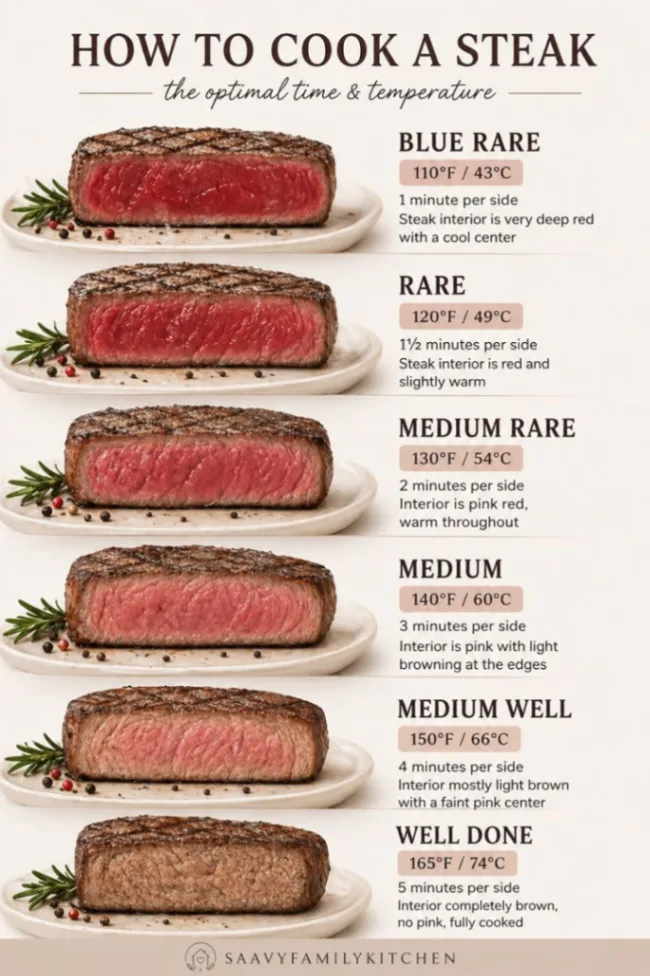
- Rare: 50–52°C
- Medium-rare: 54–57°C
- Medium: 60–63°C
- Medium-well: 65–68°C
- Well-done: 70°C+
The exact temperature you aim for can vary slightly depending on the cut and your preference. For the most consistent results, use temperature as your main guide rather than relying only on cooking time or the colour of the steak.
If you don’t have a thermometer, you can also use the steak’s firmness as a rough guide, but this method takes practice and is much less precise.
Steak Doneness Temperature Chart
If you want a steak cooked to a particular level of doneness, an instant-read thermometer is your best friend. The temperature gives you a much more reliable indication than the colour of the outside or a cooking time alone.
Because steak continues to cook after it comes off the heat, remove it a few degrees before it reaches your desired final temperature. This is known as carryover cooking.
| Steak Doneness | Approx. Final Internal Temperature | What to Expect |
|---|---|---|
| Rare | 50–52°C | Cool to warm centre with a deep red colour |
| Medium-rare | 54–57°C | Warm, red-pink centre with plenty of moisture |
| Medium | 60–63°C | Warm pink centre with less redness |
| Medium-well | 65–68°C | Mostly cooked through with a small amount of pink |
| Well-done | 70°C+ | Cooked through with little to no pink |
A Note About Steak Temperature and Food Safety
These temperatures are commonly used as culinary doneness guides, not as a guarantee of food safety. Food-safety recommendations can be higher than the temperatures associated with rare or medium-rare steak.
For people who are more vulnerable to foodborne illness, such as young children, older adults, pregnant people or anyone with a weakened immune system, following Australian food-safety guidance and choosing thoroughly cooked meat is the safer approach.
For everyday cooking, the important thing is to understand that doneness and food safety are related but aren’t exactly the same thing. A thermometer helps you know precisely how your steak has been cooked rather than relying on appearance alone.r months, cucumbers are perfect for simple salads and lunches.
How to Check Steak Temperature Correctly
Using a meat thermometer is simple, but where you place it matters. If the thermometer is in the wrong spot, you may get a reading that doesn’t accurately represent the centre of your steak.
1. Check the Thickest Part
Insert the thermometer into the thickest part of the steak, aiming for the centre. This is where the steak will take the longest to cook.
For a thicker steak, insert the thermometer from the side rather than straight down from the top. This makes it easier to reach the centre without accidentally measuring a hotter outer section.
2. Avoid Touching the Pan or Bone
Make sure the thermometer tip isn’t touching the cooking pan, grill grate or a bone. These can give you a misleading temperature reading.
If you’re cooking a bone-in steak, position the thermometer in the meat beside the bone rather than pushing it into the bone itself.
3. Check Before You Think It’s Finished
Don’t wait until your steak looks completely cooked before checking the temperature. Start checking toward the end of cooking and remove the steak when it is approaching your target temperature.
The steak will continue to cook slightly while it rests, so this helps prevent accidentally overshooting your preferred doneness.
4. Let the Steak Rest
Once your steak reaches the appropriate temperature, transfer it to a plate or board and let it rest before serving. Resting gives the juices time to redistribute and allows the temperature to settle.
Saavy Tip: If you’re cooking steak regularly, an inexpensive instant-read thermometer is one of the most useful kitchen tools you can have. It takes the guesswork out of cooking and can help prevent both undercooking and accidentally turning an expensive steak into a well-done one.ily meals.
Can You Tell If Steak Is Done Without a Thermometer?
Yes, but it is much harder to be precise.
Experienced cooks can often judge steak doneness by looking at the colour, checking how firm the meat feels when pressed, and keeping track of cooking time. However, these methods are only estimates because steaks vary in thickness, cut and starting temperature.
The Finger or Firmness Test
One common method is to gently press the centre of the steak with your finger or tongs. As steak cooks, it generally becomes firmer.
- Rare: Very soft and yielding
- Medium-rare: Soft but with some resistance
- Medium: Firmer, but still slightly springy
- Medium-well: Quite firm
- Well-done: Firm with very little give
The problem is that this takes practice, and what feels “medium” to one person may feel different to another. A thick steak can also feel quite firm on the outside while the centre is still less cooked than expected.
What About Cutting Into the Steak?
You can cut into the centre to check the colour, but it isn’t the best method. It releases some of the juices and makes it harder to judge the final doneness consistently.
If you don’t have a thermometer, checking the firmness and colour can give you a rough idea. For the most reliable result, however, an instant-read thermometer is still the easiest option.
Saavy Tip: If you regularly cook steaks, investing in a basic meat thermometer is usually worth it. It removes the guesswork and is especially helpful when cooking thicker steaks.
What Does Each Level of Steak Doneness Look Like?
If you’re cooking steak for different people, it helps to know what each level of doneness should look and feel like. While appearance can give you a useful clue, remember that internal temperature is a more reliable guide than colour alone.
Rare
Rare steak has a deeply red centre and should feel very soft when pressed. The centre will be warm rather than cold, with a very juicy texture.
Medium-Rare
Medium-rare steak has a warm red to pink centre and is usually tender and juicy. It should have some resistance when gently pressed but still feel relatively soft.
Medium
Medium steak has a warm pink centre with less redness than medium-rare. The meat will feel firmer but should still have some spring when pressed.
Medium-Well
Medium-well steak is mostly cooked through, with only a small amount of pink remaining in the centre. It will feel noticeably firmer than medium steak.
Well-Done
Well-done steak is cooked through with little or no pink remaining. It will feel firm and can become dry or chewy if cooked for too long.
Don’t Rely on Colour Alone
The colour of a steak can vary depending on the cut, cooking method and other factors. A browned exterior doesn’t necessarily mean the centre is cooked to your preferred level.
For the most consistent results, use the appearance and firmness as clues, but let your thermometer make the final call.helps you save money while avoiding food waste.
Why Your Steak Can Look Done but Still Be Undercooked
One of the most frustrating things about cooking steak is that the outside can look perfectly done while the centre hasn’t reached the temperature you want.
This is especially common with thick-cut steaks. The outside is exposed directly to the heat, so it can brown and develop a delicious crust well before the heat has reached the middle.
The Outside Cooks Faster Than the Centre
A hot pan or grill can quickly brown the surface of your steak. However, heat takes time to move through the meat.
This means you can have a steak that looks beautifully browned on the outside but is still quite rare in the centre.
Thickness Makes a Big Difference
A thin steak cooks much more quickly than a thick steak. Two steaks can weigh a similar amount but require very different cooking times if one is much thicker than the other.
This is why cooking steak based solely on a recipe’s suggested cooking time can sometimes give inconsistent results.
Browning Doesn’t Tell You the Internal Temperature
A dark, caramelised crust is a sign that your steak has developed good surface browning, but it doesn’t tell you whether the centre is rare, medium or well-done.
For the best results, use the crust as a visual cue and your thermometer to check what’s happening inside.
Saavy Tip: If your steak is nicely browned on the outside but isn’t cooked enough in the centre, don’t panic. Lower the heat and continue cooking gently, checking the internal temperature regularly until it reaches your desired doneness.
Don’t Forget About Carryover Cooking
One of the easiest ways to accidentally overcook a steak is forgetting that it doesn’t stop cooking the moment you take it out of the pan.
The steak will continue to cook from the residual heat inside the meat, causing its internal temperature to rise slightly as it rests. This is known as carryover cooking.
When Should You Take Steak Off the Heat?
If you’re aiming for a particular level of doneness, remove the steak from the heat a few degrees before it reaches your desired final temperature.
For example, if you’re aiming for medium-rare, you can remove the steak when it is approaching the lower end of the medium-rare range, then allow it to finish cooking as it rests.
The exact amount of temperature increase can vary depending on the thickness of the steak, cooking temperature and cooking method, so there isn’t one number that works for every steak.
Why Resting Matters
After cooking, transfer your steak to a plate or board and let it rest for several minutes before slicing.
Resting gives the steak time to finish cooking and allows its juices to redistribute, helping you get a more tender and juicy result.
Saavy Tip: Keep an eye on the temperature rather than relying on a set number of minutes. A thermometer lets you see when the steak has reached the doneness you want without having to guess.
How Long Does Steak Take to Cook?
There isn’t one exact cooking time that guarantees a steak will be done perfectly. Cooking time can vary considerably depending on the thickness of the steak, the cut, starting temperature, cooking method and how well-done you want it.
A thin steak can cook in just a few minutes, while a thick steak may need considerably longer to reach the same internal temperature.
What Affects Steak Cooking Time?
Thickness: This is one of the biggest factors. A thick steak takes longer for the heat to reach the centre.
Starting temperature: A steak taken straight from the refrigerator will generally take longer to cook than one that has been allowed to warm slightly before cooking.
Cooking method: Pan-frying, grilling, broiling and oven-finishing can all produce different results.
Heat level: Higher heat can brown the outside quickly, but it doesn’t necessarily mean the centre will cook faster in the way you want.
Desired doneness: A rare steak obviously requires less cooking than a well-done steak.
So, How Long Should You Cook Steak?
Rather than relying on a specific number of minutes, use cooking time as a rough guide and check the internal temperature as you get close to your desired doneness.
This is particularly important when cooking an expensive steak. A thermometer can help you avoid cutting into it repeatedly or accidentally cooking it past the level of doneness you wanted.
Saavy Tip: If you’re following a recipe that gives a cooking time, treat it as a starting point rather than a guarantee. Your steak may need more or less time depending on its thickness and your cooking equipment.
Common Mistakes That Can Ruin Your Steak
Even when you have a good-quality steak, a few simple mistakes can make it harder to get the doneness you’re aiming for. Here are some of the most common ones to watch out for.
Cooking Only by Time
A recipe might say to cook your steak for a certain number of minutes per side, but cooking times aren’t universal. Thickness, heat and the starting temperature of the steak can all make a difference.
Use the suggested cooking time as a guide, then check the internal temperature.
Cutting Into the Steak Too Early
It can be tempting to cut into the middle to see if it’s done, but doing this repeatedly releases juices and makes it harder to judge the final result.
A thermometer gives you a much easier way to check the centre without slicing the steak open.
Relying Only on the Colour
A beautifully browned outside doesn’t necessarily mean the centre has reached your preferred temperature. Likewise, the colour inside can sometimes be affected by factors other than doneness.
Use colour as a clue, not your only test.
Forgetting Carryover Cooking
If you wait until your steak reaches its final target temperature before taking it off the heat, it may continue cooking and end up more done than you intended.
Remember to allow for some carryover cooking while the steak rests.
Not Letting the Steak Rest
Slicing into a steak immediately after cooking can result in juices running across your cutting board instead of staying in the meat.
Give the steak a few minutes to rest before slicing and serving.
Using the Wrong Part of the Steak for Your Temperature Reading
If the thermometer tip is too close to the surface, touching the pan or inserted into a bone, you may get an inaccurate reading.
Always aim for the thickest part of the meat, preferably checking from the side on a thicker steak.
Saavy Tip: When in doubt, remember the simple formula: cook, check, remove slightly early, rest and check again if needed. With a little practice, you’ll find it much easier to consistently cook steak to your preferred doneness.
Frequently Asked Questions
How do I know if my steak is done without cutting it?
The most reliable way is to use an instant-read thermometer and check the thickest part of the steak. You can also use firmness as a rough guide, but this takes practice and is less accurate.
What temperature is medium-rare steak?
Medium-rare steak is generally around 54–57°C as a final internal temperature. Because the steak continues cooking after it comes off the heat, remove it slightly before reaching the final temperature.
Can steak be pink and still be cooked?
Yes. Pink colour does not automatically mean that steak is undercooked. Different levels of doneness can have varying amounts of pink in the centre, which is why internal temperature is a more useful guide than colour alone.
How do I know if my steak is well-done?
Well-done steak should have little to no pink remaining in the centre and will feel quite firm when pressed. For a more reliable indication, check the internal temperature with a meat thermometer.
Should I check steak temperature while it’s cooking or after?
Check it towards the end of cooking, before you think the steak is completely done. This gives you time to remove it from the heat before it goes past your preferred level of doneness.
Why is my steak brown outside but still raw inside?
The outside of the steak is exposed directly to the high heat of the pan or grill, so it can brown much faster than the centre cooks. This is particularly common with thick steaks. Reduce the heat and continue cooking until the centre reaches your desired temperature.
How long should steak rest after cooking?
A few minutes of resting is generally helpful, particularly for thicker steaks. The exact time isn’t as important as allowing the steak to settle before slicing.
Is rare or medium-rare steak safe to eat?
Rare and medium-rare are culinary descriptions of doneness, not food-safety guarantees. Food-safety recommendations can require higher temperatures, particularly for people who are more vulnerable to foodborne illness. When food safety is a concern, follow Australian food-safety guidance and choose thoroughly cooked meat.
Saavy Budget-Friendly Ideas
Cooking steak well doesn’t have to mean buying the most expensive cut. A few simple techniques can help you get better results while making the most of what you spend.
Buy Steak When It’s on Special
Keep an eye out for supermarket specials and markdowns, particularly when you’re planning meals ahead. You can portion and freeze suitable steaks for another meal.
Use a Meat Thermometer
A basic instant-read thermometer can help prevent overcooking, which is especially important when you’re cooking a more expensive cut. Getting the temperature right can mean the difference between a tender steak and one that ends up dry and overcooked.
Try More Affordable Cuts
You don’t always need premium cuts such as eye fillet. Depending on the cooking method, cuts such as rump, blade or other less expensive options can make a great steak dinner when cooked appropriately.
Make the Sides Do More of the Work
Stretch a steak further by serving it with filling, inexpensive sides such as roasted potatoes, homemade chips, rice, salad or seasonal vegetables.
You can also slice one larger steak and serve it over a salad, in wraps or alongside plenty of vegetables for a satisfying family meal.
Don’t Waste the Leftovers
If you have leftover cooked steak, slice it thinly and use it in sandwiches, wraps, salads, fried rice or pasta. This turns a small amount of leftover meat into another meal rather than letting it go to waste.
Saavy Tip: The biggest money-saving trick is simply cooking the steak correctly the first time. A thermometer is a small kitchen investment that can help you avoid wasting an expensive piece of meat.
The Bottom Line: Take the Guesswork Out of Cooking Steak
Knowing when steak is done doesn’t have to be complicated. While colour, firmness and cooking time can all give you clues, an instant-read thermometer is the most reliable way to check the internal temperature.
Remember to:
- Check the thickest part of the steak.
- Use temperature rather than cooking time alone.
- Remove the steak slightly before it reaches your final target temperature.
- Allow for carryover cooking while it rests.
- Let the steak rest before slicing.
- Use extra care with food safety if serving people who are more vulnerable to foodborne illness.
Once you get used to checking the temperature, you’ll find it much easier to cook steak exactly how you like it—without cutting into it repeatedly or hoping you’ve got it right.
Saavy Tip: Keep your meat thermometer somewhere easy to reach. It can take the guesswork out of not just steak, but chicken, roasts, burgers and many other meats too.
More Recipes & Kitchen Guides You’ll Love
If you’re working on getting your steak just right, these other Saavy Family Kitchen recipes and cooking guides can help make dinner easier:
- How to Cook Steak in a Pan – A simple method for getting a deliciously browned crust while keeping the centre cooked to your preferred doneness.
- Easy Homemade Garlic Butter – A quick topping that makes a simple steak feel a little more special.
- Easy Roast Potatoes – A classic, budget-friendly side that pairs perfectly with steak.
- How to Cook Vegetables Perfectly – Helpful tips for getting your vegetables tender without overcooking them.
- Common Cooking Problems & Easy Kitchen Solutions – Practical answers to everyday cooking problems, from food sticking to pans to uneven cooking.
Whether you’re cooking a quick weeknight dinner or treating yourself to a steak night, a few simple techniques can make a big difference.