
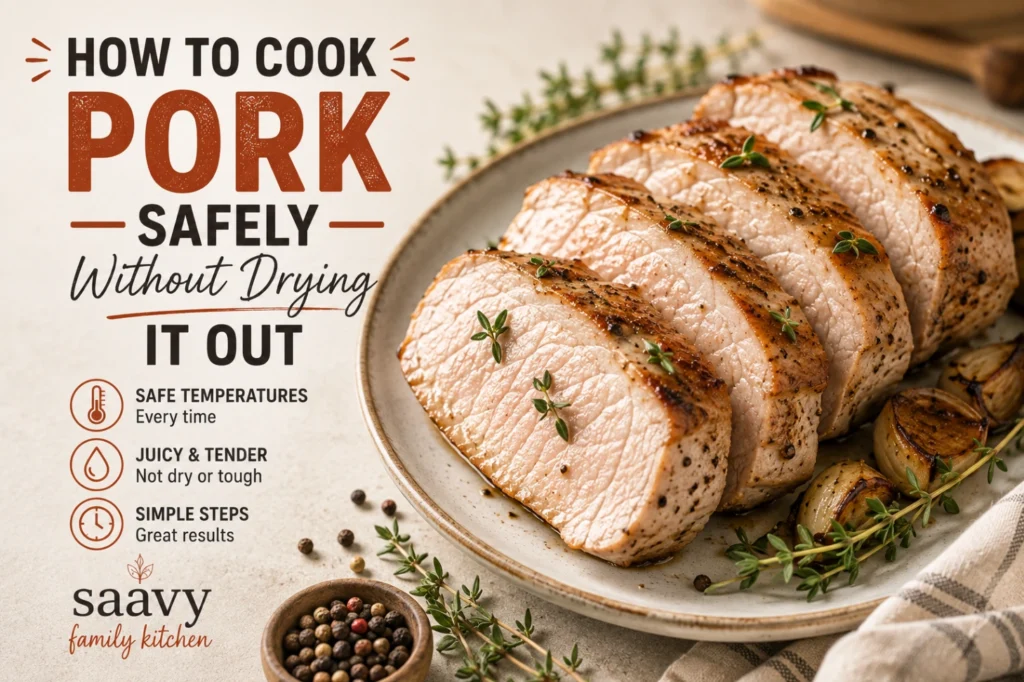
How to Cook Pork Safely Without Drying It Out
Pork can be juicy, tender and full of flavour while still being cooked safely. The trick is knowing when it is actually done, rather than simply cooking it until it is completely white and hoping for the best.
Overcooking is one of the easiest ways to turn pork chops, tenderloin and lean pork roasts dry and tough. A meat thermometer takes the guesswork out of the process, helping you cook pork to a safe internal temperature without leaving it on the heat longer than necessary.
In Australia, Food Standards Australia New Zealand recommends using a food thermometer and notes that cooking food to 70°C in the centre will generally help make it safe to eat. Minced, rolled or otherwise processed meats such as pork sausages and mince should reach 75°C in the centre.
In this guide, we’ll look at the safest temperatures for different types of pork, how to check the temperature correctly, why pork dries out and the simple cooking techniques that can help you serve pork that is both safe to eat and deliciously juicy.
What Temperature Is Pork Safe to Eat?
The safest way to tell whether pork is cooked is to check its internal temperature with a food thermometer. Colour alone isn’t a reliable way to judge whether meat is safe to eat.
For whole cuts of pork, such as chops, steaks and roasts, aim for 70°C in the centre. For minced or processed pork, such as pork mince and sausages, aim for 75°C in the centre.
| Type of pork | Safe internal temperature |
|---|---|
| Pork chops | 70°C |
| Pork steaks | 70°C |
| Pork loin | 70°C |
| Pork tenderloin | 70°C |
| Pork roast | 70°C |
| Pork mince | 75°C |
| Pork sausages | 75°C |
| Rolled or stuffed pork | 75°C |
The thermometer is more reliable than colour
Pork doesn’t need to be cooked until it is completely white throughout. Depending on the cut and cooking method, properly cooked pork can sometimes retain a little pink colour.
Instead of cutting into the meat to check, insert your thermometer into the thickest part of the pork, avoiding any bone. For thicker cuts, check in more than one spot and use the lowest reading as your guide.
This helps you avoid the two common problems with pork: undercooking it because you’re relying on appearance, or overcooking it because you’re afraid of a little pinkness.
Why Does Pork Dry Out?
Pork usually becomes dry because it is cooked for too long or to a higher temperature than necessary. This is especially common with lean cuts such as pork loin, tenderloin and pork chops, which contain less fat to help keep them moist.
The good news is that you don’t need to choose between safe pork and juicy pork. Using a food thermometer lets you stop cooking once the centre has reached a safe temperature, rather than continuing to cook the meat simply because you’re worried it isn’t done.
A few common reasons pork dries out include:
- Overcooking: The longer pork stays exposed to heat, the more moisture it can lose.
- Relying on cooking time alone: Oven temperature, thickness and the starting temperature of the meat can all affect how quickly it cooks.
- Using the wrong cooking method: A lean pork tenderloin doesn’t need the same treatment as a fatty pork shoulder.
- Cutting into the meat repeatedly: Each cut releases some of the juices you’re trying to keep inside.
- Skipping the resting time: Allowing pork to rest before slicing gives the juices time to redistribute.
The key is to cook according to the cut, check the internal temperature and avoid leaving the pork on the heat longer than necessary. FSANZ recommends using a clean food thermometer to check that food has reached a safe internal temperature
How to Cook Pork Without Drying It Out
Once you know the safe internal temperature, the next step is learning how to reach that temperature without leaving the pork on the heat for too long.
The best approach depends on the cut, but these simple habits can help keep pork juicy and tender:
- Use a meat thermometer: Start checking the temperature before you expect the pork to be completely cooked. This helps prevent accidental overcooking.
- Choose the right cooking method: Quick-cooking methods work well for tender cuts such as chops and tenderloin, while tougher cuts such as pork shoulder benefit from longer, slower cooking.
- Don’t rely on colour: Pork can still have a little pinkness even when it has reached a safe temperature. Use the thermometer rather than cooking until the meat looks completely white.
- Check the thickest part: Insert the thermometer into the centre or thickest section of the meat, avoiding bone, fat or gristle where possible.
- Don’t keep cooking “just to be safe”: Once the pork has reached the appropriate safe temperature, continuing to cook it will generally only increase the risk of drying it out.
- Let it rest before slicing: Resting gives the meat time to settle before you cut into it, helping you keep more of those juices on the plate.
The goal isn’t to cook pork for as long as possible. It’s to cook it thoroughly enough to be safe, then stop before unnecessary cooking turns a tender piece of pork into a dry one.
Safe Pork Temperatures by Cut
Different pork cuts need slightly different approaches, but the easiest way to take the guesswork out of cooking is to check the internal temperature at the thickest part with a clean food thermometer.
For home cooking, FSANZ states that 70°C in the centre will generally help ensure food is safe to eat. It specifically recommends at least 75°C in the centre for minced or rolled meats, including pork sausages, pork mince and rolled roasts.
| Pork cut | Target internal temperature |
|---|---|
| Pork chops | 70°C |
| Pork steaks | 70°C |
| Pork loin | 70°C |
| Pork tenderloin | 70°C |
| Whole pork roast | 70°C |
| Pork mince | 75°C |
| Pork sausages | 75°C |
| Rolled pork roast | 75°C |
A note about rolled pork
Rolled or stuffed pork is treated differently because the preparation process can move bacteria from the outside of the meat into the centre. For these types of cuts, aim for at least 75°C in the centre rather than using the 70°C guideline for an intact whole cut.
Where should you check the temperature?
Insert the probe into the thickest part of the pork, avoiding bone where possible. For a large or irregularly shaped piece, check more than one area and make sure the centre has reached the appropriate temperature. It’s also recommended that you allowing the thermometer reading to stabilise before relying on the result.
How to Keep Different Cuts of Pork Juicy
Not all pork should be cooked in the same way. A lean pork tenderloin needs a very different approach from a well-marbled pork shoulder, and choosing the right cooking method can make a big difference to the final texture.
The key is to match the cooking method to the cut and avoid cooking lean pork for longer than necessary.
Pork Chops
Pork chops are relatively lean, so they can quickly become dry if overcooked. They are best suited to relatively quick cooking methods such as pan-frying, grilling or roasting.
For thicker chops, searing the outside before finishing the cooking can help develop a golden crust while keeping the cooking time under control. Avoid repeatedly flipping or cutting into the meat to check whether it is done.
Pork Tenderloin
Pork tenderloin is one of the leanest pork cuts, which makes it particularly easy to overcook.
Sear it over higher heat to develop colour, then finish cooking until it reaches the appropriate safe internal temperature. Because it is a small, lean cut, start checking it early rather than relying solely on a fixed cooking time.
Pork Loin and Pork Roasts
Pork loin is another relatively lean cut, so gentle cooking and careful temperature control are important.
A larger roast will continue cooking as it rests, so avoid leaving it in the oven simply because you want to be absolutely certain it is done. Check the centre and allow the roast to rest before slicing.
Pork Shoulder
Pork shoulder is a completely different story. It contains considerably more connective tissue and is well suited to low-and-slow cooking.
Rather than trying to cook it quickly like a pork chop, give it plenty of time to become tender. This makes pork shoulder ideal for pulled pork, slow-cooker recipes and long oven roasts.
Pork Mince and Sausages
Minced and rolled meats require extra care because the preparation process can move bacteria from the surface into the centre. FSANZ recommends cooking minced or rolled meats, including pork mince and pork sausages, to at least 75°C in the centre.
These cuts are also more forgiving when cooked with moisture, such as in meatballs, pasta sauces, casseroles or sausage-based dishes.
The Simple Rule to Remember
Lean pork needs careful cooking; tougher, fattier cuts need time.
If you treat every pork cut as though it needs the same cooking time and temperature, you’re much more likely to end up with either dry meat or meat that hasn’t been cooked appropriately.
For a step-by-step guide to checking meat temperatures correctly, see our How to Cook Meat to the Right Temperature guide.
Why Is My Pork Still Pink?
One of the biggest reasons people overcook pork is the belief that it must be completely white throughout before it is safe to eat.
That’s not necessarily the case.
Colour isn’t a reliable way to determine whether pork is safely cooked. The internal temperature is a much better guide. In Australia, FSANZ states that cooking food to 70°C in the centre will generally help ensure it is safe to eat, while minced or rolled meats such as pork mince, sausages and rolled roasts should reach at least 75°C in the centre.
This means a whole cut of pork can sometimes retain a little pink colour even after reaching the appropriate temperature. Trying to cook away every trace of pink can mean leaving the pork on the heat unnecessarily, which is one of the easiest ways to end up with dry meat.
What should you look for instead?
Rather than judging pork by colour alone:
- Check that the centre has reached the appropriate safe temperature.
- Make sure the outside of a whole cut has been properly cooked.
- Be particularly careful with minced, rolled, stuffed or mechanically tenderised pork, which requires more thorough cooking.
- Don’t repeatedly cut into the pork to check it, as this can release moisture.
If you’re unsure how to check meat temperature correctly, our How to Cook Meat to the Right Temperature guide covers the general thermometer technique so you don’t need to guess.
The goal isn’t perfectly white pork – it’s pork that has reached a safe temperature while retaining as much moisture as possible.
Common Pork Cooking Mistakes
Even when you know the correct safe temperature, a few common cooking mistakes can leave pork dry, tough or disappointing. Fortunately, most are easy to avoid.
Cooking Every Cut the Same Way
Pork chops, tenderloin and pork shoulder have very different textures and fat levels. A lean tenderloin needs relatively quick cooking, while a tougher shoulder benefits from a long, slow cook.
The fix: Choose your cooking method based on the cut rather than treating all pork as though it needs the same cooking time.
Cooking Until There Is No Pink at All
Trying to eliminate every trace of pink can lead to overcooking. Colour isn’t a reliable indicator of whether a whole cut has reached a safe temperature.
The fix: Use the appropriate internal temperature as your guide rather than cooking until the pork looks completely white.
Relying Only on the Recipe’s Cooking Time
A recipe might say that a pork roast takes a certain amount of time, but cooking time can vary depending on the size and thickness of the cut, your oven and whether the meat started cold.
The fix: Treat cooking times as an estimate and check the pork when it is approaching the expected finish time.
Cutting Into the Pork Repeatedly
It can be tempting to cut into a chop or roast to see whether it’s done, but doing this repeatedly can release some of the juices you’re trying to keep inside.
The fix: Check once the pork is close to being done, then allow it to rest before slicing.
Overcooking Lean Cuts
Pork tenderloin, loin and some chops don’t have much fat to protect them from prolonged cooking.
The fix: Keep a closer eye on lean cuts and remove them from the heat once they have reached the appropriate safe temperature.
Treating Pork Shoulder Like a Pork Chop
Pork shoulder contains more connective tissue and is designed for a completely different style of cooking. Trying to cook it quickly can leave you with meat that is tough rather than tender.
The fix: Give shoulder plenty of time to cook slowly until the connective tissue has broken down and the meat becomes tender.
Forgetting About Food Safety After Cooking
Cooking pork safely is only part of the process. Raw pork should also be kept separate from cooked food and ready-to-eat ingredients to reduce the risk of cross-contamination. FSANZ recommends keeping raw and cooked foods separate and refrigerating perishable foods at 5°C or colder.
The fix: Use separate plates and utensils for raw and cooked pork, clean surfaces after handling raw meat, and refrigerate leftovers promptly.
The simplest rule is: choose the right method for the cut, avoid unnecessary cooking, and follow good food-safety practices from preparation through to leftovers.
How Long Should Pork Rest?
Resting pork before slicing gives the meat a chance to settle after cooking and can help keep more moisture in the meat when you cut into it.
For smaller cuts such as pork chops and tenderloin, a short rest of around 5 minutes is usually enough. Larger pork roasts can benefit from a longer rest of around 10–20 minutes, depending on their size.
Try not to skip this step, especially with a larger roast. Cutting into the pork immediately can allow more of the juices to run onto the cutting board rather than staying with the meat.
Don’t Let It Sit Out for Too Long
Resting doesn’t mean leaving cooked pork on the bench indefinitely. Cooked meat is a perishable food and should not be left sitting at room temperature for extended periods. FSANZ recommends keeping perishable food refrigerated at 5°C or colder, or keeping hot food at 60°C or hotter.
For a normal family dinner, simply allow the pork to rest for the appropriate amount of time while you finish the rest of the meal, then slice and serve.
Saavy tip: If you’re worried about the pork cooling too quickly, loosely cover a larger roast while it rests. Avoid wrapping it tightly, as trapped steam can soften a crisp exterior.
How to Store and Reheat Leftover Pork Safely
A good pork dinner doesn’t have to end when the meal is over. Leftover pork can be used for sandwiches, wraps, fried rice, salads and quick family dinners — but it needs to be cooled and stored properly.
Get Leftovers Into the Fridge Promptly
Don’t leave cooked pork sitting on the bench for hours. FSANZ recommends keeping perishable foods at 5°C or colder, and advises that food left between 5°C and 60°C for more than 4 hours should be discarded.
For larger amounts of pork, divide the leftovers into smaller portions or shallow containers so they cool more quickly before refrigeration.
Reheat Only What You Need
If you’re reheating leftover pork, take out the portion you plan to eat rather than repeatedly heating and cooling the entire batch.
Reheat it quickly until it is piping hot, then serve straight away. FSANZ recommends reheating potentially hazardous food quickly to 60°C or hotter when it is being reheated for hot holding.
Keep Leftovers Juicy
Reheating can make lean pork even drier, so add a little moisture where appropriate. Try reheating sliced pork with a small amount of gravy, sauce or stock, or use it in a dish where it can absorb moisture.
Saavy tip: Slice leftover pork before storing it if you already know you’ll be using it for lunches. It’s quick to grab and much easier to reheat gently without repeatedly warming the whole roast.
Quick Tips for Juicy, Safe Pork
You don’t need complicated techniques to get pork that is both safe and tender. A few simple habits can make a noticeable difference.
- Choose the right cut for the cooking method. Quick-cook lean cuts such as chops and tenderloin, while tougher cuts such as shoulder benefit from longer cooking.
- Don’t cook pork simply until it looks done. Use the appropriate internal temperature as your safety guide.
- Avoid overcooking lean pork. Once it has reached the appropriate temperature, continuing to cook it can leave it unnecessarily dry.
- Give larger cuts time to rest. A short rest before slicing can help the pork retain more moisture.
- Don’t cut into pork repeatedly while it cooks. Check it when needed rather than repeatedly opening or slicing the meat.
- Keep raw and cooked pork separate. Use clean plates and utensils for cooked meat to avoid cross-contamination. FSANZ specifically recommends keeping raw meat separate from cooked and ready-to-eat foods.
- Handle leftovers promptly. Refrigerate perishable leftovers at 5°C or colder and use them within a few days.
The biggest takeaway
Safe pork doesn’t have to be dry pork.
The secret is knowing your cut, using the appropriate cooking method and stopping once the pork has reached a safe temperature rather than continuing to cook it “just in case.”
For the general guide to cooking meat to the right temperature, including how to check temperatures accurately, see our How to Cook Meat to the Right Temperature guide.
Frequently Asked Questions About Cooking Pork Safely
Can pork still be pink when it is cooked?
Yes. Colour isn’t a reliable way to determine whether a whole cut of pork is safely cooked. The internal temperature is a better guide. FSANZ states that cooking food to 70°C in the centre will generally help ensure it is safe to eat. Minced or rolled meats, including pork mince, sausages and rolled roasts, should reach at least 75°C in the centre.
What temperature should pork be cooked to in Australia?
For whole cuts of pork, 70°C in the centre will generally help ensure the meat is safe to eat. For minced or rolled pork products, FSANZ recommends at least 75°C in the centre.
Why is my pork dry even though I cooked it safely?
Pork can become dry when it is cooked well beyond the temperature needed for safety. Lean cuts such as tenderloin, loin and some pork chops are particularly easy to overcook. Choosing the right cooking method for the cut and avoiding unnecessary extra cooking can help keep them juicy.
How do I know when pork is done?
The most reliable way is to check the internal temperature rather than relying on colour or cooking time. For a general guide to checking meat temperatures, see our How to Cook Meat to the Right Temperature guide.
How long should pork rest after cooking?
Smaller cuts such as pork chops can usually benefit from a short rest of around 5 minutes, while larger roasts can rest for around 10–20 minutes. Resting before slicing can help reduce the amount of moisture lost when you cut into the meat.
What is the best way to cook pork without drying it out?
Match the cooking method to the cut. Lean cuts such as chops and tenderloin generally suit quicker cooking, while tougher cuts such as pork shoulder benefit from slower cooking. The biggest mistake is treating every pork cut the same way.
How should leftover pork be stored?
Refrigerate leftover pork promptly and keep it at 5°C or colder. FSANZ recommends keeping perishable food out of the 5°C–60°C temperature danger zone as much as possible and using refrigerated leftovers within a few days.
How should leftover pork be reheated?
Reheat leftover pork quickly until it is steaming hot throughout. If you’re reheating food for hot holding, FSANZ recommends reheating it rapidly to at least 60°C.
Can I use the same cooking method for pork chops and pork shoulder?
Not usually. Pork chops are relatively lean and are better suited to quicker cooking, while pork shoulder contains more connective tissue and is better suited to longer, slower cooking. Using the right method for the cut is one of the easiest ways to improve the texture of your pork.
Saavy Budget-Friendly Ideas
Cooking pork safely without drying it out can actually help your grocery budget too. When you avoid overcooking and wasting meat, you’re getting more value from every cut you buy.
Choose the Right Cut for the Meal
You don’t always need an expensive tenderloin or premium pork cut. Pork shoulder, pork mince and sausages can be much more affordable and work beautifully in family-friendly meals.
Use tender cuts when you want a quick dinner and save tougher cuts for slow-cooked meals where their texture becomes an advantage.
Buy Larger Cuts When They’re on Special
A larger pork loin or shoulder can sometimes work out cheaper per kilogram than buying smaller portions. Divide it into meal-sized portions before freezing, or cook a larger piece and plan several meals around the leftovers.
Turn Leftovers Into Another Meal
Don’t let leftover pork sit forgotten in the fridge. Use it in:
- Pork fried rice
- Toasted sandwiches
- Wraps and rolls
- Tacos
- Pasta dishes
- Noodle bowls
- Salads
- Homemade pizzas
A small amount of leftover pork can go a long way when combined with vegetables, rice, pasta or other inexpensive ingredients.
Don’t Overcook Expensive Cuts
One of the simplest ways to avoid wasting money is to stop cooking pork once it has reached the appropriate safe temperature. Overcooking a lean, more expensive cut can leave you with dry meat that nobody wants to finish.
A food thermometer can help you avoid that guesswork and reduce unnecessary overcooking. FSANZ recommends using a clean food thermometer to check that food has reached a safe internal temperature.
Make Tougher Cuts Work for You
Affordable pork shoulder can be an excellent choice when you have time for slow cooking. The longer cooking process helps transform a tougher cut into tender meat that can stretch across several meals.
Saavy tip: When buying pork, think beyond the price per kilogram. A cheaper cut that can provide several family meals may offer much better value than a small premium cut that only serves one dinner.
The Bottom Line: Safe Pork Doesn’t Have to Be Dry
Cooking pork safely doesn’t mean you have to settle for dry, tough meat.
The biggest difference comes from knowing your cut, choosing the right cooking method and checking the internal temperature rather than relying on colour alone. Whole cuts of pork can generally be cooked to 70°C in the centre, while minced, rolled, stuffed or mechanically tenderised pork should reach at least 75°C.
Once you’ve reached the appropriate temperature, avoid unnecessary extra cooking. Give larger cuts a short rest before slicing, and handle leftovers safely by refrigerating them promptly.
If you’re cooking meat regularly, our How to Cook Meat to the Right Temperature guide is the best place to learn the general thermometer and temperature basics. Then you can come back to this guide whenever you’re cooking pork and need the cut-specific advice.
The goal is simple: cook pork safely, don’t overcook it, and enjoy pork that’s still juicy enough to want seconds.
More Helpful Cooking Guides
Cooking doesn’t always go to plan, but a few simple techniques can make a big difference. If you’re looking for more practical kitchen advice, these guides can help:
- How to Cook Meat to the Right Temperature – A complete guide to safe meat temperatures and knowing when meat is properly cooked.
- Common Cooking Problems & Easy Kitchen Solutions – Simple fixes for some of the most common problems home cooks run into.
- Why Does Food Stick to the Pan? – Learn what causes sticking and how to get better results when cooking.
- Why Isn’t My Food Crispy? – Find out why food loses its crispiness and the easy changes that can help.
- How to Fix Undercooked Rice Without Starting Again – Simple ways to rescue rice without throwing it away.
Explore more Cooking Guides for practical tips, troubleshooting advice and easy ways to become a more confident home cook.