
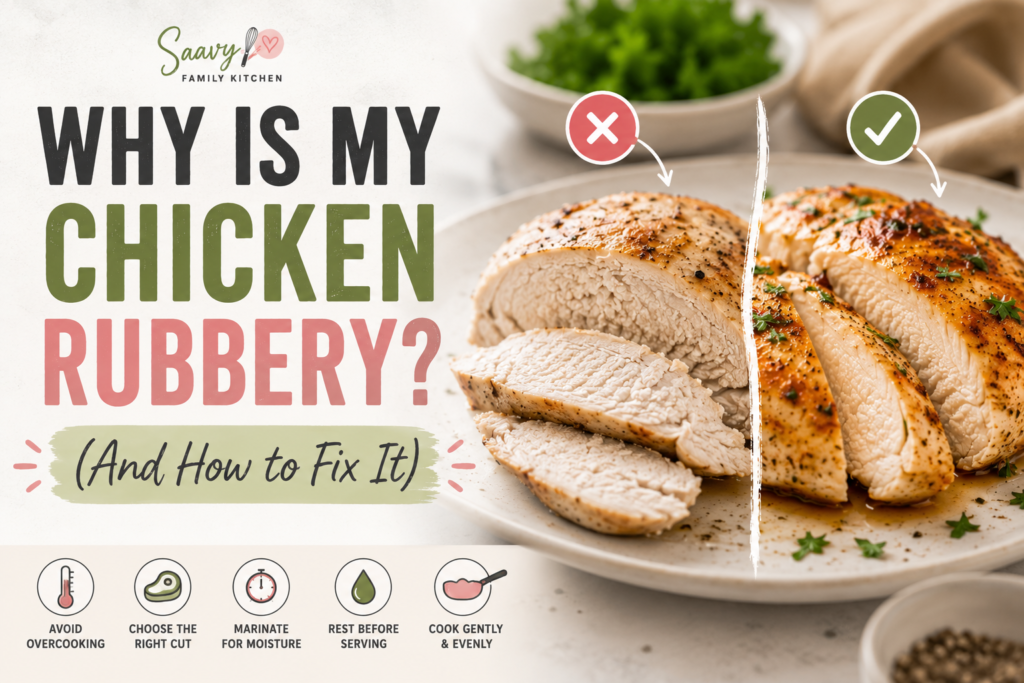
Why Is My Chicken Rubbery? (And How to Fix It)
There are few dinner disappointments quite like biting into a piece of chicken that feels like it has been practising for a career as a rubber band.
You followed the recipe, added your seasoning, cooked it carefully… and somehow your chicken went from juicy and tender to chewy, tough, and strangely determined to fight back.
The good news? Rubbery chicken is usually caused by a few simple cooking mistakes – and once you know what to look for, it is much easier to avoid.
Whether you are cooking chicken breast, thighs, grilled chicken, stir fry, or oven-baked chicken, understanding why it becomes rubbery will help you create meals that are tender, juicy, and family-approved.
Having other cooking problems? Visit our Cooking Problems Collection for simple fixes to common kitchen mistakes, from dry chicken and burnt food to undercooked meals.
The Most Common Reasons Chicken Becomes Rubbery
Chicken usually becomes rubbery because the muscle fibres tighten too much during cooking. This can happen when chicken is exposed to too much heat, cooked for too long, or prepared in a way that removes too much moisture.
The most common causes include:
- Overcooking chicken
- Cooking at too high a temperature
- Using very lean chicken breast without enough moisture
- Not allowing chicken to rest after cooking
- Cutting chicken incorrectly
- Starting with poor-quality or previously frozen chicken
The good news is that most of these problems are easy to fix.
Overcooking Is the #1 Cause of Rubbery Chicken
The biggest reason chicken becomes rubbery is simply cooking it for too long.
Chicken needs to reach a safe internal temperature of 75°C (165°F), but leaving it on the heat long after it reaches that point causes the proteins to tighten and squeeze out moisture.
The result?
Dry, chewy chicken that requires a little more effort to eat than anyone planned.
A digital meat thermometer is the easiest way to avoid this problem because it lets you remove chicken as soon as it reaches the correct temperature.
Cooking Chicken at Too High a Temperature
High heat can create a beautifully browned outside, but it can also cause the outside of the chicken to cook much faster than the inside.
This often leads to:
- A dry exterior
- A tough texture
- An unevenly cooked centre
For juicy chicken, aim for controlled heat rather than maximum heat.
Medium heat on the stovetop, moderate oven temperatures, and allowing the pan to preheat properly will usually give better results.
Chicken Breast Is More Likely to Become Rubbery
Chicken breast is a popular choice because it is lean, affordable, and versatile.
However, it also has less fat than chicken thighs, which means it has less protection against drying out.
To keep chicken breast tender:
- Avoid overcooking it
- Pound thicker pieces to an even thickness
- Marinate before cooking
- Let it rest before slicing
- Slice against the grain
Chicken thighs are naturally more forgiving because they contain more fat and connective tissue, making them harder to overcook.
Not Adding Enough Moisture or Flavour
Chicken breast can benefit from extra moisture before cooking.
Marinades, brines, sauces, and seasoning pastes can help improve texture while adding flavour.
Simple options include:
- Lemon and garlic marinade
- Greek yoghurt marinade
- Olive oil and herb seasoning
- Honey soy marinade
- BBQ-style sauces
Even a short marinade can make a noticeable difference.
Skipping the Resting Time
Resting chicken is one of the easiest steps to skip – especially when everyone is hungry and dinner is ready.
But giving chicken a few minutes to rest allows the juices to redistribute throughout the meat.
If you cut into chicken immediately, those juices can end up on the cutting board instead of staying inside the chicken.
A short 5-minute rest can make the difference between dry chicken and tender chicken.
Cutting Chicken the Wrong Way
The way you slice chicken can affect how tender it feels when eating.
Always try to slice chicken against the grain.
The grain refers to the direction the muscle fibres run. Cutting across these fibres shortens them, making each bite easier to chew.
This is especially important for:
- Chicken breast
- Grilled chicken
- Stir fry chicken
Can You Fix Rubbery Chicken Once It Is Cooked?
Unfortunately, once chicken has been severely overcooked, you cannot completely reverse the texture.
However, you can make it more enjoyable by adding moisture.
Try:
- Slicing it thinly and adding sauce
- Turning it into chicken pasta
- Adding it to soup
- Mixing it into wraps or sandwiches
- Shredding it with a flavourful sauce
Sometimes a “failed” chicken dinner just needs a different purpose.
How to Prevent Rubbery Chicken Every Time
For consistently tender chicken, follow these simple steps:
- Choose the right cut for your recipe
- Bring chicken closer to room temperature before cooking
- Use even-sized pieces
- Avoid cooking at unnecessarily high heat
- Check the internal temperature
- Let chicken rest before slicing
- Slice against the grain
Small changes make a big difference.
FAQ’s About Rubbery Chicken
Why is my chicken breast rubbery but not dry?
Chicken can feel rubbery when the proteins tighten too much during cooking. This can happen even if there is still some moisture inside the meat.
Does freezing chicken make it rubbery?
Freezing itself does not make chicken rubbery, but poor freezing and thawing methods can affect texture. Always thaw chicken safely in the refrigerator when possible.
Is rubbery chicken safe to eat?
Rubbery chicken is usually a texture problem rather than a safety problem. If the chicken reached 75°C (165°F), it is generally safe to eat even if it is overcooked.
Are chicken thighs less likely to become rubbery?
Yes. Chicken thighs contain more fat and connective tissue, which helps them stay moist and tender compared with lean chicken breast.
Saavy Family Kitchen Tip
If you cook chicken regularly, an instant-read thermometer is one of the easiest kitchen upgrades you can make.
It takes the guesswork out of cooking and helps you avoid the two biggest chicken problems: undercooked chicken and the dreaded rubbery chicken situation nobody wants at the dinner table.
Perfect chicken is not about complicated techniques – it is about knowing when to stop cooking.
More Chicken Recipes To Try
Once you have mastered tender chicken, try these easy family favourites: