
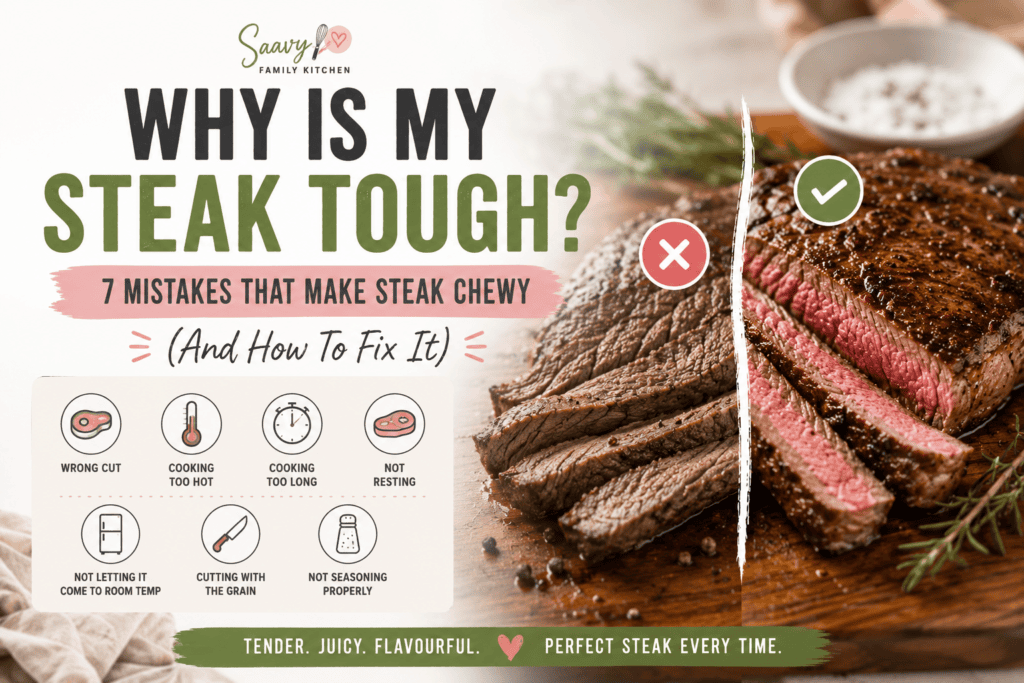
Why Is My Steak Tough? 7 Mistakes That Make Steak Chewy (And How To Fix It)
There’s nothing more disappointing than looking forward to a juicy steak, only to end up with a tough, chewy piece of meat that feels impossible to cut.
If you’re wondering “why is my steak tough?”, the problem usually isn’t the quality of the meat alone. Cooking temperature, preparation, resting time, and even how you slice your steak can all affect the final texture.
The good news? Most tough steak problems are easy to fix.
In this guide, we’ll cover the most common reasons your steak turns out tough and the simple changes that can help you cook a tender, restaurant-style steak at home.
“If you’re struggling with other common kitchen problems, explore our Cooking Problems Hub for simple fixes, troubleshooting tips, and easy ways to improve your results in the kitchen.”
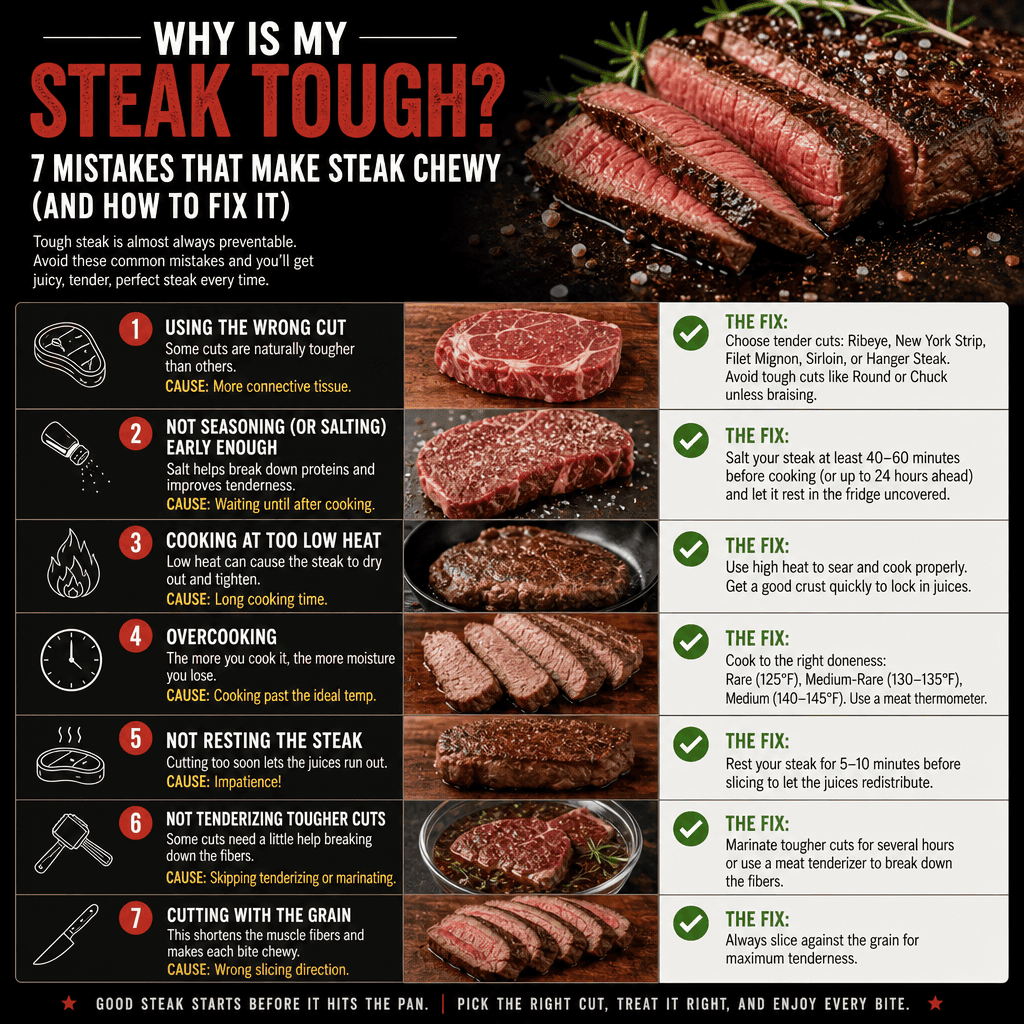
Quick Fixes For Tough Steak
If your steak is already cooked and chewy, try these quick fixes:
- Slice the steak thinly against the grain
- Add a sauce, butter, or marinade for extra moisture
- Avoid reheating at high temperatures
- Turn leftovers into steak sandwiches, wraps, or stir-fries
For your next steak, focus on choosing the right cut, cooking at the correct temperature, and allowing the meat to rest before slicing.
7 Reasons Your Steak Is Tough
1. You Chose The Wrong Cut Of Steak
Not all steaks are naturally tender.
Some cuts contain more connective tissue and require slower cooking methods to break them down. Others are naturally tender and better suited for quick grilling or pan frying.
Tender steak cuts include:
- Ribeye
- Scotch fillet
- Tenderloin
- Sirloin
- Strip steak
Cuts like chuck or some budget steaks can still be delicious, but they often need different cooking methods.
Saavy Budget Tip
You don’t always need the most expensive steak. Buying a more affordable cut and using the right cooking technique can give you great results without overspending.
2. You Overcooked Your Steak
One of the biggest reasons steak becomes tough is cooking it for too long.
As steak cooks, the muscle fibres tighten and moisture is pushed out. The longer it cooks, the firmer and drier it can become.
Common mistakes include:
- Cooking a thin steak like a thick steak
- Leaving steak on the heat too long
- Guessing instead of checking the temperature
A digital meat thermometer removes the guesswork and helps you cook steak to your preferred doneness.
Recommended Steak Temperatures
| Doneness | Internal Temperature |
|---|---|
| Rare | 50–52°C |
| Medium Rare | 55–57°C |
| Medium | 60–63°C |
| Medium Well | 65–68°C |
| Well Done | 70°C+ |
3. You Didn’t Let Your Steak Rest
Cutting into steak immediately after cooking can cause the juices to run out onto your plate instead of staying inside the meat.
Resting allows the juices to redistribute throughout the steak, helping it stay more tender and flavourful.
A good rule:
- Thin steaks: rest around 5 minutes
- Thick steaks: rest 10 minutes or longer
Cover loosely with foil while resting.
4. You Sliced Your Steak The Wrong Way
Even a perfectly cooked steak can seem tough if it is sliced incorrectly.
Every steak has muscle fibres running through it. Cutting with the grain leaves those fibres long and chewy.
Instead:
Slice against the grain.
This shortens the muscle fibres, making each bite easier to chew.
5. Your Pan Wasn’t Hot Enough
A hot cooking surface helps create the flavourful crust that makes steak delicious.
If your pan isn’t hot enough:
- The steak may release water
- The outside can become grey instead of browned
- Cooking time increases
- The steak may become tougher
A heavy-based pan, cast iron skillet, or quality stainless steel pan can help create better results.
6. Your Steak Was Too Cold Before Cooking
Taking steak straight from the fridge and placing it into a hot pan can make it cook unevenly.
The outside may overcook before the centre reaches the right temperature.
For better results:
- Remove steak from the fridge
- Let it sit briefly before cooking
- Pat dry with paper towel
- Season well
This helps create a better crust and more even cooking.
7. You Didn’t Season Or Tenderise Properly
Seasoning does more than add flavour.
Salt helps enhance the natural taste of the meat and can improve texture when used correctly.
For tougher cuts, consider:
- Marinating
- Slow cooking
- Using a meat tenderiser
- Adding acidic ingredients like lemon juice or vinegar
Just remember: marinades can improve flavour and texture, but they cannot completely transform a naturally tough cut into a tender steak.
How To Cook A Tender Steak Every Time
Follow these simple steps:
1. Choose the right steak
Pick a cut suited for quick cooking.
2. Bring steak closer to room temperature
Avoid cooking it fridge-cold.
3. Dry the surface
Moisture prevents browning.
4. Season generously
Salt and pepper are often enough.
5. Use high heat
Create a good crust quickly.
6. Check the internal temperature
Don’t rely only on cooking time.
7. Rest before slicing
Give the juices time to settle.
Tools That Help Prevent Tough Steak
Digital Meat Thermometer
A thermometer is one of the easiest ways to avoid overcooking steak.
It helps you:
- Cook steak to your preferred doneness
- Avoid dry, chewy meat
- Get consistent results every time
Check our recommended kitchen thermometer →
Quality Kitchen Tongs
Good tongs help you flip steak without piercing the meat and losing valuable juices.
Cast Iron Pan
A cast iron pan holds heat well and helps create the deep crust many people love on steak.
Why Is My Steak Tough But Not Overcooked?
If your steak is cooked correctly but still tough, possible reasons include:
- The cut of meat naturally has more connective tissue
- The steak was sliced with the grain
- The meat quality was lower
- It needed a marinade or slower cooking method
Sometimes the cooking method simply doesn’t match the cut.
Can You Make Tough Steak Tender After Cooking?
You cannot completely undo overcooking, but you can make it more enjoyable.
Try:
- Thinly slicing against the grain
- Adding a sauce or gravy
- Using it in tacos, wraps, or sandwiches
- Chopping it into stir-fry pieces
Frequently Asked Questions
Why is my steak chewy even though it is medium rare?
Medium rare does not always guarantee tenderness. The steak cut, slicing method, and meat quality also affect texture.
Does steak get tougher the longer you cook it?
For most quick-cooking steaks, yes. Longer cooking causes moisture loss and firmer texture.
Should I marinate steak to make it tender?
Marinades can help improve flavour and soften the surface of some cuts, but they work best when matched with the right type of steak.
What is the easiest way to cook tender steak?
Using a good quality cut, high heat, a meat thermometer, and allowing the steak to rest will give the most consistent results.
Final Thoughts
If you’re wondering why your steak is tough, the answer usually comes down to a few simple mistakes: cooking too long, choosing the wrong cut, skipping the resting step, or slicing incorrectly.
With the right technique and a few helpful kitchen tools, you can turn ordinary steak into a tender, juicy meal your family will actually enjoy.
More Cooking Tips & Fixes
Still troubleshooting your cooking? Find more simple solutions in our Cooking Problems Hub, where we cover common kitchen mistakes and how to fix them.
→ Explore the Cooking Problems Hub
You may also find these helpful:
- Why Is My Chicken Rubbery? – Learn the common mistakes that make chicken tough and chewy, plus how to fix them.
- Why Is My Chicken Dry? – Simple tips to keep chicken juicy and full of flavour.
- Digital Meat Thermometer Guide – Take the guesswork out of cooking meat perfectly every time.
- Kitchen Skills & Basics – Build confidence with essential cooking techniques and tips.